
Sepsis Lab Tests Explained
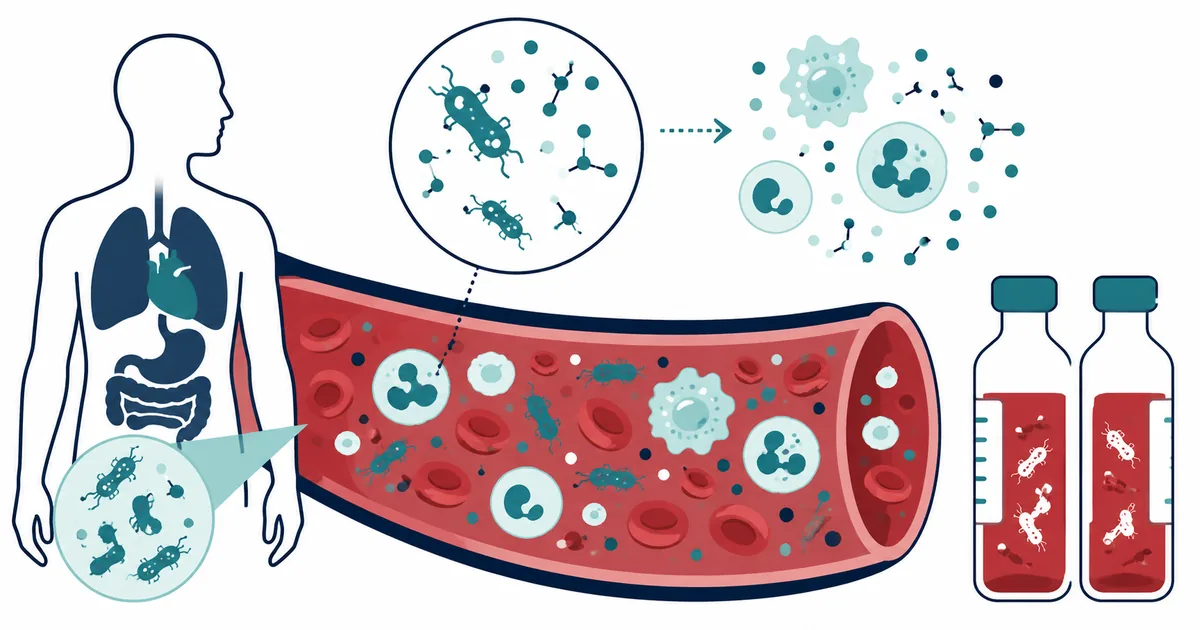
Sepsis is a serious medical emergency that can happen when the body has an extreme response to infection. In suspected sepsis, laboratory tests help healthcare professionals gather information quickly: whether infection may be present, how the body is responding, whether organs may be under stress, and whether treatment needs urgent adjustment.
A sepsis lab test panel is not usually one single test. Instead, clinicians use a group of blood, urine, culture and chemistry tests alongside symptoms, observations, examination findings and medical history.
This page explains the main laboratory tests that may be used when sepsis is suspected. It is educational only and does not replace urgent medical assessment.
Why lab tests matter in suspected sepsis
Sepsis can progress quickly. Laboratory tests help answer several urgent questions:
| Clinical question | Lab tests that may help |
|---|---|
| Is there evidence of infection? | Blood cultures, urine culture, sputum culture, swabs |
| Is the immune system reacting strongly? | Full blood count, CRP, procalcitonin |
| Is oxygen delivery or blood flow affected? | Lactate, blood gas in some settings |
| Are organs under stress? | Kidney function, liver function, electrolytes, coagulation tests |
| Is treatment working? | Repeat cultures, trends in CRP/procalcitonin/lactate, organ markers |
No single laboratory test can diagnose sepsis by itself. Results are interpreted with the patient’s condition and clinical assessment.
Blood cultures
Blood cultures are one of the most important tests when bloodstream infection is suspected. They are used to check whether bacteria or fungi are present in the blood.
A blood culture can help clinicians:
- Detect bloodstream infection
- Identify the organism causing infection
- Test which antimicrobials may work
- Adjust treatment once results are available
Blood cultures can take time because organisms need to grow. A preliminary positive signal may appear earlier, but full identification and susceptibility testing can take longer.
Blood cultures are powerful, but they are not perfect. A person may have sepsis even if blood cultures are negative, especially if antibiotics were already started, if the infection is not in the bloodstream, or if the organism is difficult to grow.
Full blood count
A full blood count, or FBC, is commonly used in suspected infection and sepsis.
It may show:
| FBC marker | Why it matters |
|---|---|
| White blood cell count | May rise or fall with infection, inflammation or immune stress |
| Neutrophils | Often rise in bacterial infection, but patterns vary |
| Platelets | May fall in severe infection or sepsis-related clotting problems |
| Haemoglobin | Helps assess anaemia, bleeding risk or baseline status |
In sepsis, a very high or very low white blood cell count can both be important. Platelet changes may also suggest that the body’s clotting and inflammatory systems are under stress.
CRP
C-reactive protein, or CRP, is an inflammation marker. It can rise when the body is responding to infection, tissue injury or inflammatory disease.
In suspected sepsis, CRP may help show that inflammation is present, but it cannot prove sepsis by itself. CRP is non-specific, meaning it can rise in many conditions.
CRP is often more useful as part of a trend. A rising or falling CRP may help clinicians monitor the direction of inflammation, but interpretation depends on the whole case.
Procalcitonin
Procalcitonin, often shortened to PCT, is another biomarker that may rise in serious bacterial infection and sepsis.
Clinicians may use procalcitonin to:
- Support assessment of bacterial infection
- Help estimate severity in some settings
- Support antibiotic stewardship decisions
- Monitor trends over time
However, procalcitonin does not confirm sepsis alone. It can be affected by non-infectious causes such as trauma, surgery, burns, pancreatitis, shock or kidney-related factors. A low procalcitonin also does not automatically rule out infection.
This is why PCT should be interpreted with other tests, clinical findings and local protocols.
Lactate
Lactate is often used in urgent-care sepsis pathways because it can rise when tissues are not getting enough oxygen delivery or when the body is under severe stress.
A raised lactate can suggest that the body is struggling, but lactate is not specific to sepsis. It can rise in shock, severe illness, seizures, liver problems, some medicines and other contexts.
In suspected sepsis, clinicians may repeat lactate to see whether the level is improving or worsening.
Kidney and liver function tests
Sepsis can affect organ function. Blood tests may be used to monitor whether the kidneys or liver are under stress.
Common tests include:
| Test area | Example markers |
|---|---|
| Kidney function | Creatinine, urea, eGFR |
| Electrolytes | Sodium, potassium, bicarbonate |
| Liver profile | Bilirubin, ALT, AST, ALP, albumin |
| Fluid/acid-base context | Bicarbonate, blood gas in some settings |
These tests help clinicians understand the wider impact of illness, not just whether infection is present.
Coagulation tests
Sepsis can affect the clotting system. Coagulation tests may be ordered when clinicians are concerned about bleeding risk, clotting problems or disseminated intravascular coagulation.
Possible tests include:
- PT/INR
- APTT
- Fibrinogen
- D-dimer
- Platelet count
These results need specialist interpretation because clotting changes can be complex during severe infection.
Urine tests and other cultures
The source of infection is not always obvious. Depending on symptoms and clinical findings, clinicians may order:
- Urine culture
- Sputum culture
- Wound swab
- Stool testing
- Cerebrospinal fluid testing
- Fluid or tissue cultures
- Respiratory viral or bacterial molecular tests
The goal is to identify the likely source of infection and guide treatment.
Why repeat tests are common
In suspected sepsis, repeat tests may be used because a single result is only a snapshot.
Repeat testing may help monitor:
- Whether lactate is improving
- Whether kidney function is worsening
- Whether CRP or PCT is rising or falling
- Whether platelets are dropping
- Whether cultures identify an organism
- Whether organ function is stabilising
Trends often matter more than one isolated number.
Summary
Sepsis lab tests are used to build a rapid picture of infection, inflammation, organ stress and severity. Common tests include blood cultures, full blood count, CRP, procalcitonin, lactate, kidney and liver markers, electrolytes and coagulation tests.
No single test diagnoses sepsis alone. Results must be interpreted with the patient’s symptoms, observations and clinical assessment.
FAQ
What blood tests are used in suspected sepsis?
Common tests may include blood cultures, full blood count, CRP, procalcitonin, lactate, kidney function, liver function, electrolytes and coagulation tests.
Are blood cultures enough to diagnose sepsis?
No. Blood cultures can identify organisms in the blood, but sepsis is assessed using the whole clinical picture. Cultures can also be negative in some cases.
Why is procalcitonin ordered in sepsis?
Procalcitonin may support assessment of serious bacterial infection and sepsis, but it is not a stand-alone diagnostic test.
Why is lactate important in sepsis?
Lactate can rise when the body is under severe stress or when tissues are not getting enough oxygen delivery. In sepsis, it may help assess severity.
Can normal blood tests rule out sepsis?
Not necessarily. Sepsis is a clinical emergency and cannot be ruled out from one normal result alone.
Educational only. Suspected sepsis needs urgent medical assessment and should not be assessed from lab results alone.
More questions answered
Why is lactate measured when sepsis is suspected?
Lactate may be measured during the assessment of a seriously unwell person because increased concentrations can occur when tissues are under physiological stress or when circulation and oxygen delivery are impaired. However, a raised lactate level is not specific to sepsis and can occur for several other reasons. Clinicians interpret lactate alongside blood pressure, examination findings, blood gases, infection tests and other laboratory results. Suspected sepsis is a medical emergency and cannot be assessed safely from a lactate result alone.
Can someone have sepsis even if blood cultures are negative?
Yes. Blood cultures can help identify microorganisms in the bloodstream, but a negative culture does not rule out sepsis. Microorganisms may be absent from the particular sample, present in low numbers or located mainly at another infection site, and previous antimicrobial treatment can also affect culture recovery. Sepsis requires urgent clinical assessment regardless of whether a culture has already produced a result.
Urine Culture vs Blood Culture: What’s the Difference and When Is Each Used?