
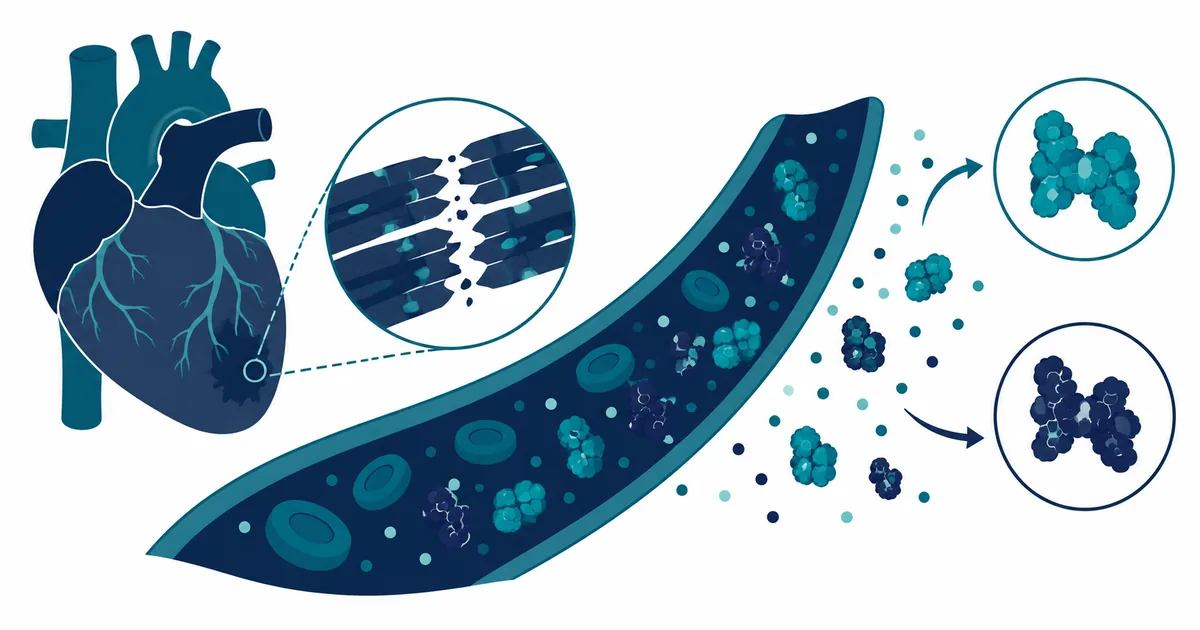
Heart Attack Blood Tests Explained
When a heart attack is suspected, blood tests can help healthcare professionals look for evidence of heart muscle damage. The most important blood test in this setting is usually troponin, but clinicians do not rely on blood tests alone.
A possible heart attack is assessed using several pieces of information:
- Symptoms
- Medical history
- Physical examination
- ECG findings
- Troponin results
- Timing of symptoms
- Repeat blood tests
- Other supporting laboratory and imaging findings
This page explains the main blood tests used in heart-attack assessment. It is educational only and should not be used to self-assess chest pain.
Why blood tests are used in suspected heart attack
A heart attack, also called myocardial infarction, can damage heart muscle. When heart muscle cells are injured, certain proteins can leak into the bloodstream.
Blood tests help clinicians answer:
| Question | Test information that may help |
|---|---|
| Is there evidence of heart muscle damage? | Troponin |
| Is the result changing over time? | Repeat troponin |
| Are there other risk factors or complications? | Glucose, kidney function, lipids, FBC, electrolytes |
| Could other conditions affect interpretation? | Kidney function, inflammation markers, clinical context |
The goal is not simply to “spot one high number”. The pattern, timing and clinical picture matter.
Troponin: the main heart attack blood test
Troponin is a protein found in heart muscle. When heart muscle is damaged, troponin can be released into the blood.
Troponin is widely used because it is more specific to heart muscle injury than many older cardiac markers.
Clinicians may use troponin to help assess:
- Possible heart attack
- Heart muscle injury
- Whether troponin is rising or falling
- Whether symptoms and ECG findings fit the blood test pattern
A high troponin result can be serious, but it does not always mean a classic heart attack. Troponin can rise in other situations that strain or injure the heart.
Why troponin tests are repeated
Troponin is often repeated because timing matters.
If blood is taken very soon after symptoms begin, troponin may not have risen yet. A repeat test can show whether the level is changing.
A rising or falling pattern may be more useful than one isolated result. Clinicians interpret the trend alongside symptoms and ECG findings.
High-sensitivity troponin
Many hospitals now use high-sensitivity troponin tests. These tests can detect very small amounts of troponin.
This can help identify heart muscle injury earlier, but it also means small elevations may be found in people with other conditions. That is why high-sensitivity troponin results require careful interpretation.
Does high troponin always mean heart attack?
No. Troponin indicates heart muscle injury, but the cause of that injury needs clinical interpretation.
Troponin may rise with:
- Heart attack
- Severe heart strain
- Heart failure
- Fast or abnormal heart rhythm
- Kidney disease
- Severe infection or sepsis
- Pulmonary embolism
- Myocarditis
- Major surgery or critical illness
This is why clinicians interpret troponin with ECG, symptoms and the overall situation.
ECG and blood tests work together
An ECG records the electrical activity of the heart. It can show patterns that suggest a heart attack or other heart problems.
Blood tests and ECG answer different questions:
| Test | What it helps assess |
|---|---|
| ECG | Electrical pattern and signs of acute heart strain or injury |
| Troponin | Biochemical evidence of heart muscle injury |
| Repeat troponin | Whether the injury marker is changing over time |
| Other blood tests | Risk factors, complications or alternative explanations |
A normal ECG does not always rule out heart injury, and a troponin result still needs clinical context.
Other blood tests that may be ordered
Although troponin is central, other blood tests may be ordered during assessment.
| Test | Why it may be ordered |
|---|---|
| Full blood count | Checks anaemia, infection pattern, platelet count |
| Kidney function | Helps interpret troponin and guide medication safety |
| Electrolytes | Potassium and other electrolytes can affect heart rhythm |
| Glucose | High glucose may be relevant in acute illness and diabetes |
| Lipid profile | Helps assess cardiovascular risk, often for longer-term management |
| Liver tests | May be part of wider acute assessment |
| Coagulation tests | May be relevant before procedures or anticoagulant treatment |
These tests do not replace troponin, but they help clinicians manage the wider clinical picture.
Older cardiac markers
Older markers such as CK-MB and myoglobin were used more often in the past. In many settings, troponin has largely replaced them for heart attack assessment because it is more sensitive and specific for heart muscle injury.
Some laboratories or clinical pathways may still use additional markers in selected situations.
Why timing matters
The timing of chest pain or symptoms affects how results are interpreted.
Clinicians may consider:
- When symptoms started
- Whether symptoms are ongoing
- Whether symptoms have changed
- The timing between symptoms and blood draw
- Whether troponin is rising or falling
- Whether ECG changes are present
This is why repeat blood tests are common in emergency assessment.
Summary
The main blood test used in heart-attack assessment is troponin. It helps detect heart muscle injury, but it does not work alone.
Clinicians interpret troponin with symptoms, ECG findings, timing, repeat test patterns and other blood tests. A single result cannot safely diagnose or rule out a heart attack by itself.
FAQ
Is troponin the main heart attack blood test?
Yes. Troponin is usually the main blood marker used to assess heart muscle injury in suspected heart attack.
Why are troponin tests repeated?
They are repeated because troponin may change over time. A rising or falling pattern can be clinically important.
Can a normal early troponin miss a very recent heart attack?
It can. If testing happens very early, clinicians may repeat troponin depending on symptoms, timing and ECG findings.
Does high troponin always mean a heart attack?
No. High troponin means heart muscle injury, but the cause can vary.
What other tests are used with troponin?
ECG, kidney function, electrolytes, full blood count, glucose and lipid tests may be used depending on the situation.
Educational only. Chest pain or suspected heart attack symptoms need urgent medical assessment and should not be assessed from blood tests alone.
Related tests and reading
- Full blood count — part of the wider workup alongside troponin. See: Full Blood Count Explained
- Kidney function test — checked before certain cardiac treatments and imaging. See: Kidney Function Test Explained
- Electrolytes — potassium and magnesium are closely linked to cardiac rhythm. See: Electrolytes Explained
- Cholesterol — a key long-term cardiovascular risk marker. See: Cholesterol Blood Test Explained
More questions answered
What does a rising or falling troponin level mean?
A change in troponin concentration over time can provide evidence that heart muscle injury is recent or changing. Clinicians often compare sequential samples rather than relying only on a single measurement because the rise or fall pattern can be clinically important. However, troponin shows heart muscle injury rather than identifying the cause by itself. Suspected heart-attack symptoms require urgent medical assessment rather than interpretation of troponin results at home.
Can kidney problems affect troponin blood test results?
Yes. People with reduced kidney function can sometimes have persistently increased troponin concentrations even when an acute heart attack is not the explanation. This does not mean an elevated result can simply be ignored, because heart disease and heart muscle injury may also occur in people with kidney disease. Clinicians may pay particular attention to previous results, symptoms, ECG findings and whether the troponin concentration changes over time. A healthcare professional should interpret an individual troponin result.
Why is an ECG still needed if troponin can detect heart muscle injury?
An ECG and a troponin test provide different types of information. Troponin measures a marker released during heart muscle injury, while an ECG records the heart’s electrical activity and may show patterns that need immediate attention. Neither test replaces the other in the assessment of suspected heart attack. Chest pain or other suspected heart-attack symptoms require urgent medical evaluation even if a previous blood test was normal.