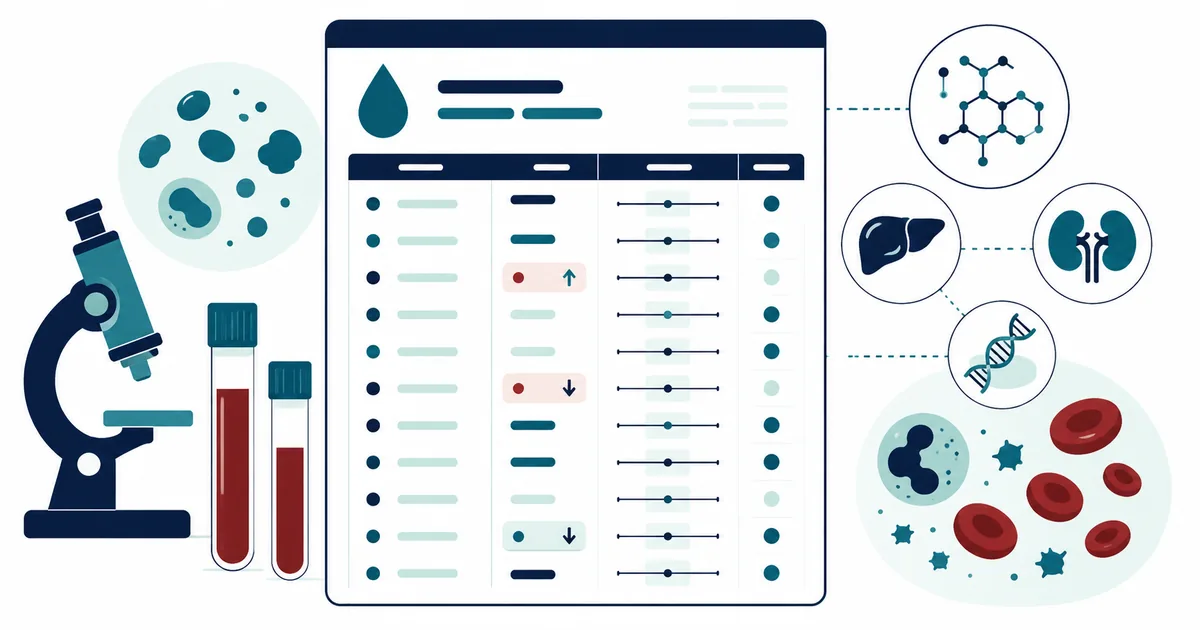
Plain-English guides to common laboratory tests, what they measure, why clinicians may order them, and why results should be interpreted with clinical context.
Want to go deeper?
Explore more lab test explainers, or check reference ranges to understand what your results mean.
Quality control vs quality assurance is the difference between checking whether day-to-day testing is performing as expected and managing the wider system that makes laboratory results reliable. Quality control (QC) includes activities such as running control materials, reviewing shifts and trends and deciding whether an analytical run is acceptable. Quality assurance (QA) is broader: it … Read more
Blood Sample Collection Explained: From Preparation to Transport Accurate blood testing begins before the sample reaches the analyser. The pre-analytical phase includes preparing the patient, confirming identity, selecting the correct specimen and tube, collecting the blood, filling and mixing tubes correctly, labelling the specimen, and storing and transporting it appropriately. Errors during this phase can … Read more
What Is a Reference Interval in Laboratory Tests? A reference interval is the range printed beside many numerical laboratory results. It gives a lower and upper limit that the laboratory uses as a comparison point. It is often called a reference range or “normal range”, but reference interval is the more precise scientific term. For … Read more
Blood Test Results Glossary: Common Report Terms Explained Blood test reports contain more than numbers. You may also see comments such as high, low, borderline, haemolysed, fasting, positive, inconclusive or repeat sample required. These terms describe how the result compares with a laboratory interval, whether the target of a test was detected, whether the specimen … Read more
Medical Lab Abbreviations: Blood Test Acronyms A–Z Medical laboratory reports often use shortened test names. You may see FBC, CRP, ALT, TSH or eGFR instead of the complete test name. These abbreviations help laboratories and healthcare teams display large amounts of information clearly. However, they can make a report difficult to understand when you are … Read more
Day in the Life of a Biomedical Scientist A day in the life of a biomedical scientist can look very different depending on the department, shift pattern and hospital service. A biomedical scientist in clinical biochemistry may spend much of the day around automated analysers, while someone in histopathology may work with tissue blocks, sections … Read more
What Is a Clinical Genetics Laboratory? A clinical genetics laboratory is a medical laboratory that investigates genetic and genomic changes that may be relevant to health. It may test DNA, chromosomes or other genetic material to support diagnosis, risk assessment, cancer care, rare disease investigation or inherited condition pathways. Modern services often use the term … Read more
What Is an Immunology Laboratory? An immunology laboratory is a medical laboratory department that tests the immune system and immune-related markers. It helps healthcare professionals investigate immune responses, autoimmune disease, allergy, immunodeficiency and some inflammatory or infection-related patterns. What does an immunology laboratory test? Area Example focus Autoimmunity Autoantibodies linked with autoimmune conditions Allergy IgE-related … Read more
What Is Microbiology? Microbiology is the study of microorganisms, including bacteria, fungi, parasites and some other microscopic life forms. In healthcare, microbiology focuses on detecting and identifying microorganisms that may be involved in infection. A medical microbiology laboratory helps healthcare professionals investigate questions such as: Is there evidence of infection? What organism may be present? … Read more
NHS Band 5 vs Band 6 Biomedical Scientist The difference between a Band 5 and Band 6 biomedical scientist is not only salary. It is mainly about responsibility, experience, specialist competence and the level of independence expected in the laboratory. Band 5 is commonly an early registered biomedical scientist role. Band 6 is commonly a … Read more