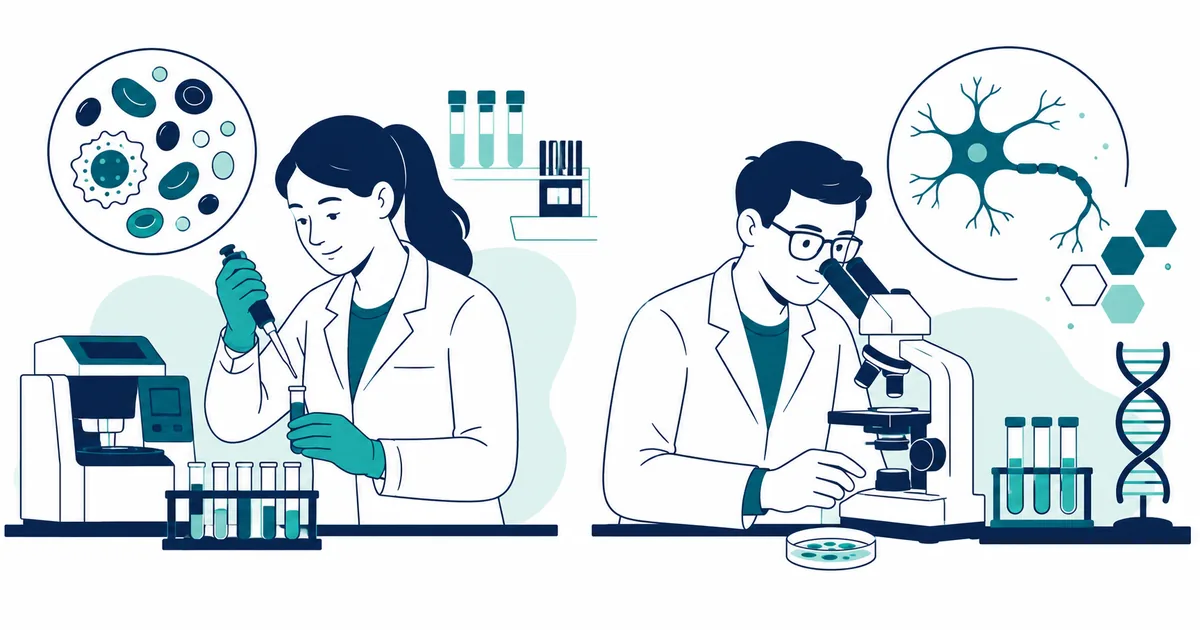
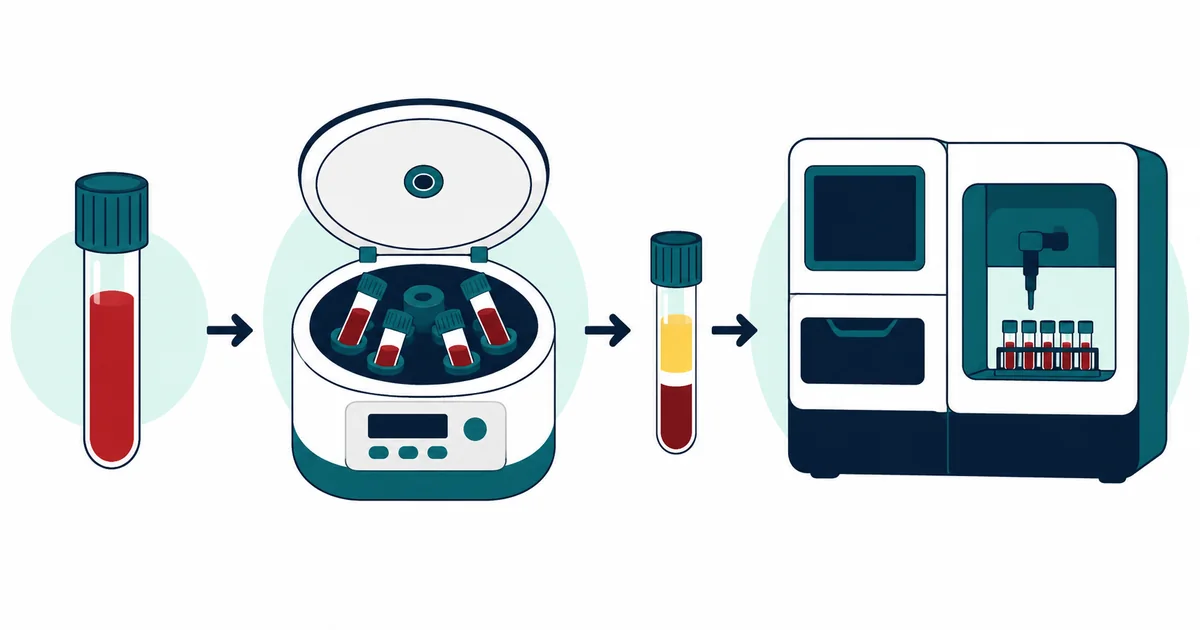
A biomedical scientist and a lab technician may work in the same laboratory, handle similar equipment and contribute to the same testing service, but the job titles are not interchangeable. In the UK, “biomedical scientist” is a protected professional title linked to HCPC registration, while “lab technician” is a broader job title whose duties and … Read more
A “biomedical science degree” does not mean exactly the same career pathway in the UK and the US. In the UK, biomedical science is closely connected with the regulated profession of biomedical scientist, while in the US the clinical laboratory profession is more commonly organised around titles such as medical laboratory scientist (MLS) or clinical … Read more
Biomedical Science vs Medical Laboratory Science: What Is the Difference? Biomedical science and medical laboratory science are closely related terms, but they do not always describe the same type of degree. The biggest mistake is assuming that the course title alone proves professional eligibility. A programme called Biomedical Science may be a professionally accredited diagnostic … Read more
What Is Cytology? Cytology is the study of cells. In a medical laboratory, cytology involves examining cells from body sites, fluids or screening samples to look for abnormal changes. Cytology is part of cellular pathology, but it is different from histopathology. Histopathology examines tissue architecture. Cytology focuses on individual cells or groups of cells. Cytology … Read more
What Is Transfusion Science? Transfusion science is the laboratory discipline that supports safe blood transfusion. It involves testing blood groups, detecting antibodies and checking compatibility before blood components are issued for patients. This is one of the most safety-critical areas of biomedical science. A transfusion laboratory must ensure that the right blood component is selected … Read more
What Is Histopathology? Histopathology is the laboratory study of diseased tissue. It involves preparing tissue samples so they can be examined under a microscope, usually by a pathologist. Histopathology is important in many areas of medicine, especially cancer diagnosis, inflammatory disease investigation, surgical pathology and biopsy reporting. Histology vs histopathology Term Meaning Histology Study of … Read more
Clinical Scientist vs Biomedical Scientist Clinical scientist and biomedical scientist are both healthcare science careers in the UK, but they are not the same role. The simplest distinction is: A biomedical scientist is usually focused on testing patient samples, validating results and supporting diagnostic laboratory services. A clinical scientist is usually focused on specialist scientific … Read more
Biomedical Science Degree Explained A biomedical science degree is a university course that studies the human body, disease, laboratory testing and the scientific basis of healthcare. It usually combines biology, chemistry, physiology, pathology, molecular science and practical laboratory skills. For many students, biomedical science is attractive because it connects science with real clinical questions. However, … Read more