
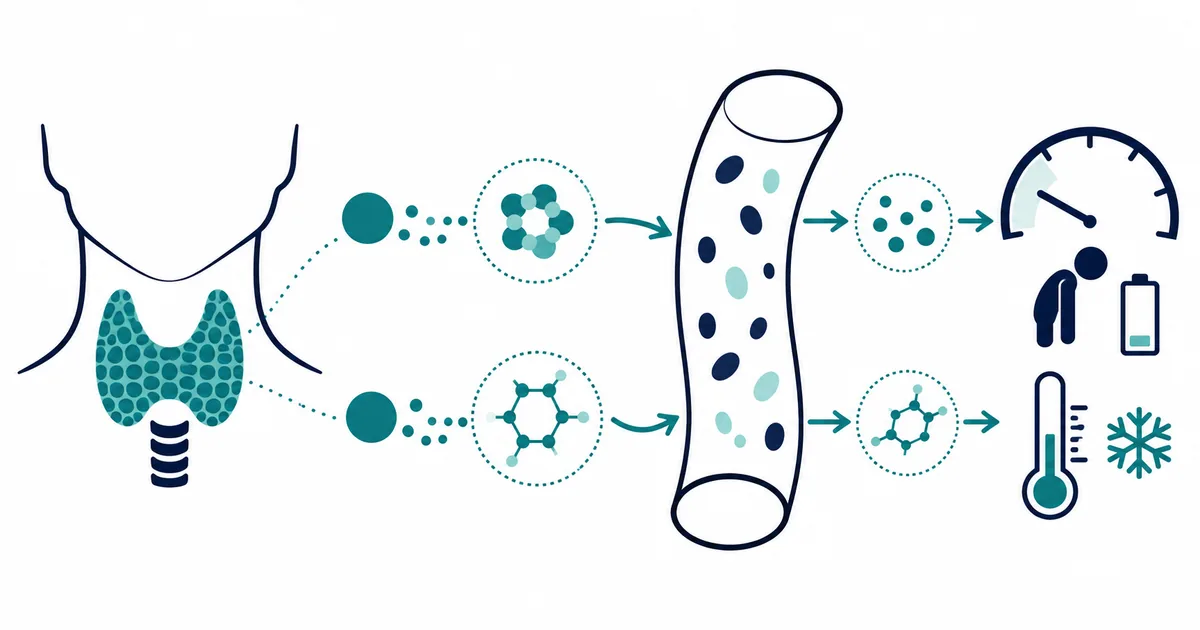
Hypothyroidism Blood Tests Explained
Hypothyroidism, also called an underactive thyroid, happens when the thyroid gland does not make enough thyroid hormones. Blood tests are essential because symptoms such as tiredness, weight gain, feeling cold, constipation or low mood can be caused by many conditions.
The main blood tests used in hypothyroidism assessment are:
- TSH
- Free T4
- Thyroid antibodies in selected cases
- Sometimes free T3 or other tests depending on the situation
This page explains how these tests fit together.
What the thyroid does
The thyroid gland makes hormones that help regulate metabolism, energy use, temperature, heart rate and many body systems.
The system is controlled by a feedback loop:
| Organ | Role |
|---|---|
| Pituitary gland | Makes TSH to signal the thyroid |
| Thyroid gland | Makes T4 and T3 thyroid hormones |
| Body tissues | Use thyroid hormones for metabolism and function |
When thyroid hormone levels are low, the pituitary usually releases more TSH to stimulate the thyroid.
TSH
TSH stands for thyroid-stimulating hormone. It is often the first test used when hypothyroidism is suspected.
In primary hypothyroidism, the thyroid gland is underactive, so TSH often rises because the pituitary is trying to push the thyroid to make more hormone.
A high TSH may suggest hypothyroidism, but interpretation depends on free T4, symptoms, pregnancy status, medicines and laboratory reference ranges.
Free T4
Free T4 measures the unbound, active fraction of thyroxine circulating in the blood.
Free T4 helps clinicians understand whether thyroid hormone levels are actually low.
A common pattern in overt primary hypothyroidism is:
| Test | Typical pattern |
|---|---|
| TSH | High |
| Free T4 | Low |
In subclinical hypothyroidism, TSH may be high while free T4 remains within the reference range.
TSH and free T4 together
TSH and free T4 are interpreted together because they answer different questions.
| Pattern | Possible interpretation |
|---|---|
| High TSH + low free T4 | Often consistent with overt primary hypothyroidism |
| High TSH + normal free T4 | May suggest subclinical hypothyroidism |
| Low/normal TSH + low free T4 | May suggest central hypothyroidism or pituitary/hypothalamic issue |
| Normal TSH + normal free T4 | Hypothyroidism is less likely in many cases |
These are simplified patterns. Clinicians interpret results using local reference ranges and patient context.
Thyroid antibodies
Thyroid antibody tests may be used to investigate autoimmune thyroid disease.
The most common cause of hypothyroidism in many settings is autoimmune thyroiditis, often called Hashimoto’s thyroiditis.
Antibody tests may include:
- Thyroid peroxidase antibodies, or TPO antibodies
- Thyroglobulin antibodies in some contexts
Positive thyroid antibodies can support an autoimmune cause, but antibody results do not always change immediate management.
Free T3
Free T3 is not usually the main test for hypothyroidism. T3 can remain normal in early hypothyroidism, and TSH/free T4 are generally more useful for underactive thyroid assessment.
Free T3 may be used in other thyroid contexts, especially hyperthyroidism assessment, depending on local practice.
Monitoring treatment
After hypothyroidism is diagnosed and treatment is started, blood tests are used to check whether hormone replacement is at the right dose.
Monitoring often focuses on TSH, with free T4 used in some situations.
The goal is not to chase a number without context. Clinicians consider:
- Symptoms
- TSH trend
- Free T4
- Dose timing
- Pregnancy
- Other medicines
- Adherence and absorption issues
- Age and heart risk
Why results can be misleading
Thyroid blood tests can be affected by:
- Pregnancy
- Severe illness
- Biotin supplements
- Some medicines
- Pituitary disease
- Timing of blood draw
- Recent treatment changes
- Laboratory method differences
If results do not match symptoms, clinicians may repeat testing or order additional tests.
Summary
Hypothyroidism blood tests usually start with TSH and free T4. Thyroid antibodies may be added when autoimmune thyroid disease is suspected.
Results are interpreted as patterns. A diagnosis should not be made from one value without clinical context.
FAQ
Is TSH the main hypothyroidism test?
TSH is usually the first-line test because it often rises when the thyroid is underactive.
Why is free T4 checked?
Free T4 helps show whether circulating thyroid hormone is actually low.
What do thyroid antibodies show?
They can support an autoimmune cause such as Hashimoto’s thyroiditis.
Can hypothyroidism symptoms happen with normal tests?
Yes. Symptoms such as tiredness and weight change can have many causes, so normal thyroid tests may lead clinicians to consider other explanations.
Can supplements affect thyroid blood tests?
Yes. Biotin and some medicines can interfere with certain thyroid tests, so clinicians may ask about supplements.
Educational only. Thyroid symptoms and blood tests should be assessed by a healthcare professional.
More questions answered
Why are TSH and free T4 usually looked at together?
TSH is produced by the pituitary gland and helps regulate thyroid hormone production, while free T4 measures circulating thyroxine that is not bound to transport proteins. Looking at both values helps clinicians assess the relationship between pituitary signalling and thyroid hormone production. Different patterns of TSH and free T4 can arise for different reasons, so one value alone may give an incomplete picture. A healthcare professional should interpret the pattern rather than using either result as a stand-alone diagnosis.
Can illness or medicines affect thyroid blood test results?
Yes. Some illnesses, medications and physiological changes can alter thyroid test results without necessarily representing a permanent thyroid disorder. They may affect hormone production, hormone binding, metabolism or the laboratory measurement itself. This is one reason TSH and free T4 results are interpreted alongside medical history and the reason the test was requested. Anyone concerned that a medicine may affect a thyroid test should discuss it with a healthcare professional rather than stopping treatment independently.