
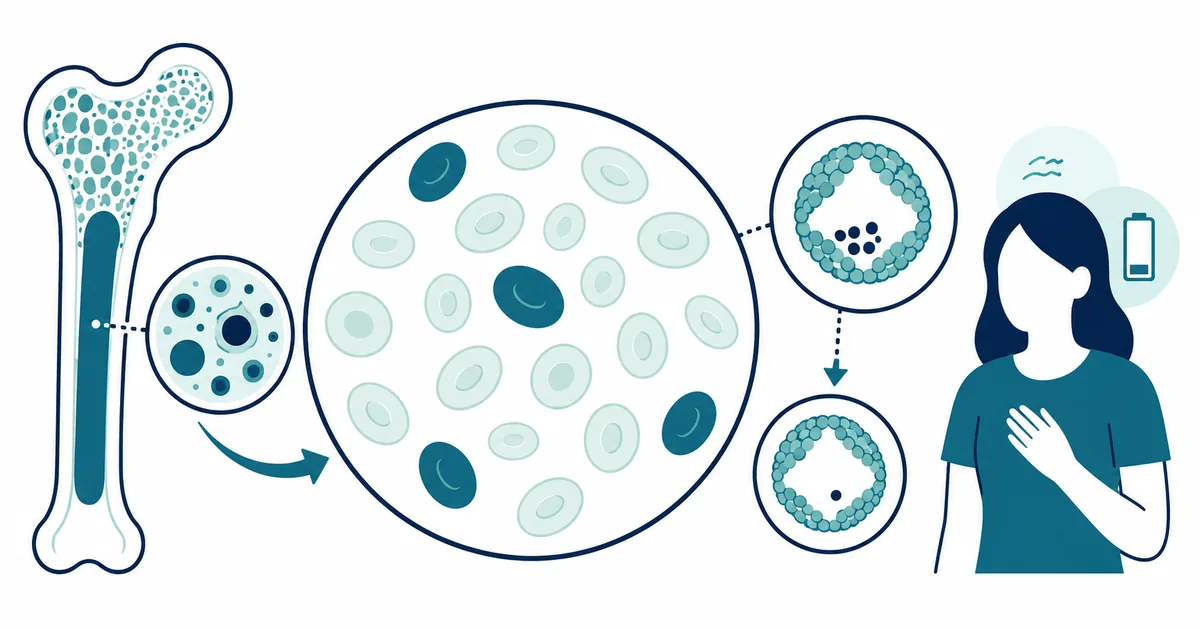
Iron Deficiency Anaemia Explained
Iron deficiency anaemia happens when the body does not have enough iron to make healthy red blood cells and haemoglobin. Haemoglobin is the protein in red blood cells that carries oxygen.
Iron deficiency can develop before anaemia appears. This means someone may have low iron stores first, then later develop low haemoglobin if the deficiency continues.
This page explains the condition through the laboratory tests commonly used to investigate it.
Iron deficiency vs iron deficiency anaemia
These terms are related but not identical.
| Term | Meaning |
|---|---|
| Iron deficiency | Iron stores are low |
| Anaemia | Haemoglobin is low |
| Iron deficiency anaemia | Low haemoglobin caused by iron deficiency |
A person can be iron deficient before they become anaemic. Ferritin may fall before haemoglobin drops.
Why iron matters
Iron is needed to make haemoglobin. Without enough iron, red blood cells may become smaller and contain less haemoglobin.
This can reduce oxygen-carrying capacity and contribute to symptoms such as:
- Tiredness
- Weakness
- Shortness of breath on exertion
- Dizziness
- Palpitations
- Pale skin
- Headaches
- Poor concentration
These symptoms are not specific to iron deficiency, so blood tests are needed.
Full blood count
A full blood count is often the first test that shows anaemia.
Important FBC markers include:
| Marker | What it means |
|---|---|
| Haemoglobin | Shows whether anaemia is present |
| MCV | Average red blood cell size |
| MCH | Average amount of haemoglobin per red cell |
| RDW | Variation in red blood cell size |
| Platelets | May rise in iron deficiency in some cases |
| White blood cells | Helps assess other patterns |
In iron deficiency anaemia, red blood cells are often microcytic and hypochromic, meaning they are smaller and paler than usual. This is reflected by low MCV and low MCH.
Ferritin
Ferritin is a protein that stores iron. A low ferritin is one of the most useful laboratory clues for iron deficiency.
Ferritin helps answer: “How much iron is stored?”
However, ferritin is also an acute-phase reactant, meaning it can rise with inflammation, infection, liver disease or other conditions. This can sometimes mask iron deficiency.
That is why clinicians may interpret ferritin with CRP, iron studies and the whole clinical picture.
Serum iron, transferrin and TIBC
Iron studies often include several related tests.
| Test | What it broadly shows |
|---|---|
| Serum iron | Iron circulating in blood at that moment |
| Transferrin | Main iron transport protein |
| TIBC | Total iron-binding capacity |
| Transferrin saturation | How much transferrin is carrying iron |
| Ferritin | Iron storage marker |
A typical iron deficiency pattern may include low ferritin, low serum iron, high TIBC or transferrin and low transferrin saturation. Patterns can be more complicated when inflammation is present.
Reticulocyte count
A reticulocyte count measures young red blood cells recently released from the bone marrow.
In iron deficiency anaemia, reticulocyte count may be low or inappropriately normal because the bone marrow lacks enough iron to make red blood cells effectively.
After treatment, reticulocytes may rise as the marrow responds, but treatment decisions belong to the healthcare professional.
Blood film
A blood film may show red blood cell changes such as:
- Small red cells
- Pale red cells
- Variation in size and shape
- Pencil cells in some cases
Blood film findings support the FBC pattern but are not always needed in every case.
Why the cause matters
Iron deficiency anaemia is a lab pattern, but clinicians also need to ask why it happened.
Possible causes include:
- Blood loss
- Heavy menstrual bleeding
- Gastrointestinal bleeding
- Pregnancy-related increased iron demand
- Low dietary intake
- Malabsorption
- Coeliac disease
- Recent surgery or illness
- Other chronic conditions
In adults, especially where gastrointestinal blood loss is possible, clinicians may investigate the cause carefully.
Iron deficiency vs anaemia of inflammation
Iron deficiency anaemia can look similar to anaemia of chronic disease or inflammation.
| Feature | Iron deficiency anaemia | Anaemia of inflammation |
|---|---|---|
| Ferritin | Usually low | Normal or high |
| Serum iron | Low | Low |
| TIBC/transferrin | Often high | Often low or normal |
| CRP/ESR | May be normal or high if another condition exists | Often raised |
| MCV | Often low | Normal or low |
This is why ferritin alone may not always be enough when inflammation is present.
Summary
Iron deficiency anaemia is usually investigated with a full blood count, ferritin, iron studies and sometimes reticulocyte count or blood film.
A low ferritin strongly supports iron deficiency, but inflammation can complicate interpretation. Clinicians also need to identify the cause of iron deficiency, not only confirm the lab pattern.
FAQ
Is low ferritin the same as iron deficiency anaemia?
Not always. Low ferritin means low iron stores. Anaemia means haemoglobin is low. Iron deficiency can happen before anaemia develops.
Which blood tests confirm iron deficiency anaemia?
Common tests include full blood count, ferritin, serum iron, transferrin/TIBC and transferrin saturation.
Can you be iron deficient before anaemia develops?
Yes. Ferritin may fall before haemoglobin becomes low.
Why can ferritin be normal in iron deficiency?
Ferritin can rise with inflammation or illness, which may mask low iron stores.
What does low MCV mean?
Low MCV means red blood cells are smaller than average. It can be seen in iron deficiency anaemia, but also in other conditions.
Educational only. Iron deficiency anaemia requires clinical assessment to confirm the pattern and investigate the cause.
More questions answered
Can ferritin be normal even if iron deficiency is suspected?
Ferritin is commonly used as a marker of the body’s iron stores, but its interpretation is not always straightforward. Ferritin can increase during inflammation, infection and some other conditions, which may make depleted iron stores harder to recognise from ferritin alone. Clinicians may therefore review ferritin alongside measurements such as transferrin saturation, haemoglobin and inflammatory markers. No single iron result should be interpreted in isolation.
Why does iron deficiency affect red blood cells?
Iron is needed to produce haemoglobin, the protein in red blood cells that carries oxygen. When insufficient iron is available, the bone marrow may eventually produce red cells containing less haemoglobin. Laboratory findings can include changes in haemoglobin, MCV and MCH, depending on the stage and cause of the deficiency. Similar blood-count patterns can occur for reasons other than iron deficiency, so laboratory findings need clinical interpretation.