
Chronic Kidney Disease Blood Tests
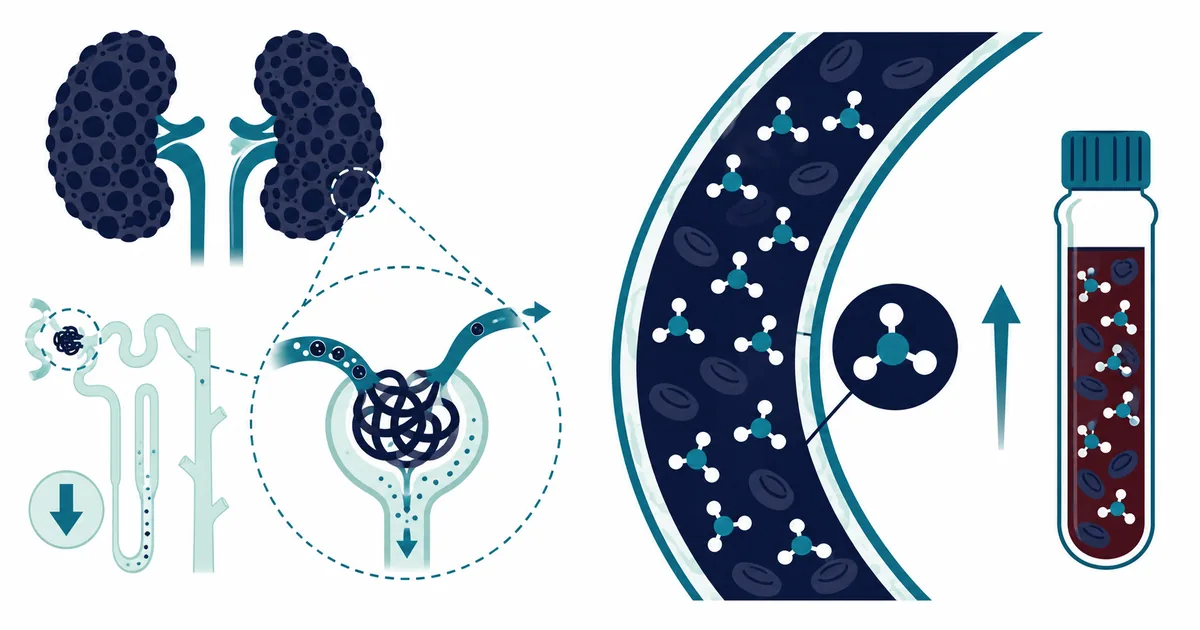
Chronic kidney disease, or CKD, is usually assessed using a combination of blood and urine tests. The most important markers are often creatinine, eGFR and urine albumin, but other blood tests help monitor complications and overall kidney-related health.
This page explains the laboratory tests commonly used in CKD investigation and monitoring.
Blood and urine tests work together
CKD is not assessed from one number alone.
| Test type | What it helps show |
|---|---|
| Blood creatinine | Waste marker used to estimate kidney filtration |
| eGFR | Estimated filtering function of the kidneys |
| Urea | Waste marker affected by kidney function and other factors |
| Electrolytes | Sodium, potassium and bicarbonate balance |
| Urine albumin/ACR | Kidney damage or leakage of protein |
| Full blood count | Anaemia related to CKD or other causes |
| Calcium/phosphate/PTH | Bone-mineral changes in some CKD stages |
| Urinalysis | Blood, protein, glucose or infection clues |
Blood tests show how well filtration and body chemistry are being maintained. Urine tests help show whether the kidney filter is leaking protein or blood.
Creatinine
Creatinine is a waste product from muscle metabolism. The kidneys filter creatinine from the blood.
If kidney filtration falls, creatinine may rise. However, creatinine is affected by muscle mass, age, sex, diet and some medicines.
This is why creatinine is usually interpreted with eGFR rather than alone.
eGFR
eGFR stands for estimated glomerular filtration rate. It is calculated from creatinine and other factors.
eGFR estimates how well the kidneys are filtering blood.
A lower eGFR may suggest reduced kidney function, but CKD usually requires persistence over time or evidence of kidney damage. One isolated low eGFR does not always mean chronic kidney disease.
Why repeat eGFR matters
CKD is chronic, meaning long-term. Clinicians may repeat eGFR to confirm whether reduced kidney function is persistent.
A temporary eGFR drop may happen with:
- Dehydration
- Acute illness
- Some medicines
- Recent contrast imaging
- Acute kidney injury
- Laboratory variation
Trends matter.
Urea
Urea is a waste product made when the body breaks down protein. It is removed by the kidneys.
Urea can rise when kidney function is reduced, but it is also affected by:
- Dehydration
- High protein intake
- Gastrointestinal bleeding
- Liver function
- Catabolic illness
Urea is helpful, but it is less specific than eGFR for assessing kidney filtration.
Electrolytes
Kidneys help regulate electrolytes and acid-base balance. CKD monitoring often includes:
| Test | Why it matters |
|---|---|
| Sodium | Fluid and salt balance |
| Potassium | High or low levels can affect heart rhythm |
| Bicarbonate | Acid-base balance |
| Chloride | Electrolyte and acid-base context |
Potassium is especially important because kidney disease and some medicines can affect potassium levels.
Urine albumin and ACR
Urine albumin-to-creatinine ratio, or ACR, checks whether albumin is leaking into urine.
Albumin in urine can be an early marker of kidney damage, especially in diabetes or high blood pressure.
ACR matters because someone can have kidney damage even when eGFR is still relatively preserved. This is why eGFR and ACR are often interpreted together.
Urinalysis
A urine dipstick or urinalysis may check for:
- Protein
- Blood
- Glucose
- Ketones
- Leukocytes
- Nitrites
- Specific gravity
Blood or protein in urine may suggest kidney or urinary tract problems and may lead to further investigation.
Full blood count
CKD can contribute to anaemia because the kidneys help produce erythropoietin, a hormone involved in red blood cell production.
A full blood count may be used to check:
- Haemoglobin
- Red blood cell indices
- White blood cells
- Platelets
If anaemia is present, clinicians may also check iron studies, B12, folate or inflammation markers.
Bone and mineral blood tests
In later or more complex CKD, clinicians may monitor mineral and bone markers.
These may include:
- Calcium
- Phosphate
- Parathyroid hormone
- Vitamin D
- Alkaline phosphatase
These tests help assess CKD-mineral and bone disorder risk, but not every person needs all tests at the same frequency.
Diabetes and cholesterol monitoring
Because CKD is often linked with diabetes and cardiovascular risk, additional tests may include:
- HbA1c
- Blood glucose
- Lipid profile
- Liver function tests if medications require monitoring
These tests help manage risk, but they are not kidney function tests by themselves.
Does one low eGFR mean CKD?
Not necessarily. CKD usually requires reduced kidney function or evidence of kidney damage that persists over time.
A clinician may repeat tests and consider:
- Previous results
- Urine ACR
- Blood pressure
- Diabetes status
- Medicines
- Acute illness
- Imaging findings
- Family history
- Age and muscle mass
Summary
Chronic kidney disease blood tests commonly include creatinine, eGFR, urea, electrolytes and sometimes bicarbonate, calcium, phosphate and full blood count. Urine albumin/ACR is also central because CKD assessment is not based on blood tests alone.
The key message: CKD monitoring is about patterns and trends, not one isolated value.
FAQ
Which blood tests monitor chronic kidney disease?
Common blood tests include creatinine, eGFR, urea, electrolytes, bicarbonate, calcium, phosphate and full blood count depending on stage and context.
Why is urine albumin important in CKD?
Urine albumin can show kidney damage even when eGFR is still relatively preserved.
Does one low eGFR mean CKD?
Not always. CKD usually requires persistent changes over time or other evidence of kidney damage.
Why is potassium checked in CKD?
Kidneys help regulate potassium. Abnormal potassium can affect heart rhythm and may be influenced by kidney function or medicines.
Why is haemoglobin checked in CKD?
CKD can contribute to anaemia, so full blood count monitoring may be needed.
Educational only. CKD blood and urine results should be interpreted by healthcare professionals using trends and clinical context.
More questions answered
Why are creatinine and eGFR often reported together?
Creatinine is a waste product measured in blood, while eGFR is an estimate of kidney filtration calculated using creatinine together with other factors included in the equation. Reporting them together gives clinicians more useful information than looking at the creatinine concentration alone. eGFR is an estimate rather than a direct measurement of kidney filtration, and its limitations must be considered when interpreting it. Kidney assessment may also include urine tests and other blood measurements.
Why might urine tests be used as well as blood tests when checking kidney health?
Blood tests mainly provide information about substances in the circulation and how effectively the kidneys are filtering them. Urine testing can provide additional information, including whether abnormal amounts of albumin or protein are being lost through the kidneys. Tests such as the urine albumin-to-creatinine ratio can therefore complement blood measurements such as creatinine and eGFR. Clinicians consider the results together rather than relying on one measurement alone.
Creatinine vs eGFR: What’s the Difference and What Do Your Results Mean?