
How Long Do Blood Test Results Take?
Blood test results can take anywhere from the same day to several weeks, depending on the type of test, how urgent it is, where the sample is processed, and whether the result needs review or confirmation.
For many routine blood tests, results may be available within a few days. NHS guidance says you may get blood test results after a few days and usually within a few weeks, and that you should contact your GP surgery or specialist if you do not hear anything after a few weeks.
That wide range can feel frustrating. One person may get a full blood count result quickly, while another waits longer for blood cultures, specialist hormone tests, genetic testing, or samples sent to a reference laboratory. The delay is not always a sign that something is wrong. It often reflects the test method, laboratory workflow, transport time, clinical review, or the need for extra checks.
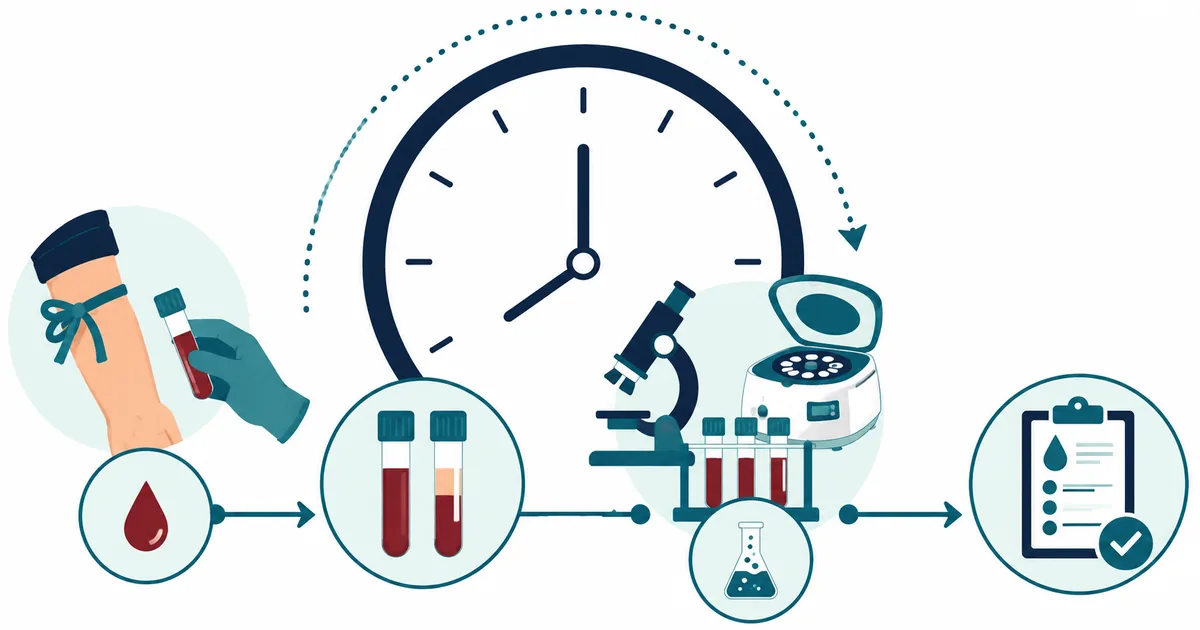
The most important point is this: turnaround time is about the whole journey from sample collection to result release, not only the few minutes it takes for an analyser to measure something.
Why blood test result times vary
Blood test result timing can vary because different tests need different processes.
Some tests are high-volume routine tests. These are performed every day in many hospital laboratories using automated analysers. Examples include full blood count, kidney function markers, electrolytes, liver markers, glucose, cholesterol, calcium, and many routine chemistry tests.
Other tests are more specialist. They may need manual processing, longer incubation, specialist equipment, batch testing, consultant review, or referral to another laboratory. These tests naturally take longer.
A simple way to think about it:
| Test type | Why timing may differ |
|---|---|
| Routine blood count or chemistry | Often automated and run frequently |
| Urgent hospital test | Prioritised because results may affect immediate care |
| Blood culture | Needs time to see whether microorganisms grow |
| Specialist hormone or protein test | May be batched or run in a specialist section |
| Genetic or molecular test | Often involves more complex processing and interpretation |
| Send-away test | Must be transported to another laboratory |
| Confirmatory test | May require repeat testing or specialist review |
So when people ask, “How long do blood test results take?” the honest answer is: it depends on the test and the pathway.
What happens between the needle and the result?
A blood test begins with sample collection. NHS guidance explains that a healthcare professional usually takes a small amount of blood from a vein, collects it into a tube, and sends it to a laboratory for testing.
After collection, several steps may happen:
- The sample is labelled and matched to the request.
- The sample is transported to the laboratory.
- The lab receives and books in the sample.
- The sample may be centrifuged or prepared.
- The analyser or method performs the test.
- Quality control and technical checks are applied.
- Abnormal, unexpected, or critical results may need review.
- The result is released to the requesting healthcare team.
- The healthcare team may review the result before the patient sees it.
This means a sample can be physically tested before the result appears in a patient app or portal. Result release is not always the same thing as analyser completion.
Which blood tests are often faster?
Routine automated tests are often faster because laboratories run them frequently and process large numbers of samples every day.
These may include:
- Full blood count
- Urea and electrolytes
- Creatinine and eGFR
- Liver function tests
- Glucose
- Calcium
- Magnesium
- Phosphate
- CRP
- Thyroid function tests in many labs
- Cholesterol or lipid profile
However, “common” does not guarantee instant. Results still depend on appointment time, sample transport, lab opening hours, priority level, and whether the result needs review.
Why urgent results may be faster
In hospitals, some blood tests are marked urgent because they may affect immediate care. Emergency departments, intensive care units, operating theatres, and acute wards often need fast results.
Examples may include:
- Troponin for suspected heart muscle injury
- Potassium for electrolyte emergencies
- Full blood count in acute bleeding or infection assessment
- Coagulation tests before urgent procedures
- Blood gases
- Lactate
- Crossmatch or transfusion-related testing
Urgent results may be processed faster because they are prioritised. This does not mean routine outpatient samples are ignored. It simply means laboratories triage work based on clinical need.
Why some results take days or weeks
Some tests take longer because biology, method, or workflow requires more time.
Blood cultures
Blood cultures are used to look for microorganisms in blood. They cannot be completed instantly because the laboratory often needs time to see whether bacteria or fungi grow. If growth occurs, the lab may need additional testing to identify the organism and check which antibiotics may work.
This is why blood cultures can take longer than routine chemistry or haematology tests.
Specialist tests
Some specialist tests are not run every hour or every day. They may be batched to make testing efficient and accurate. Batching means the lab waits until there are enough samples to run the test together.
Send-away tests
Some tests are sent to another laboratory because the local lab does not perform them. This adds transport, booking-in, testing, review, and reporting time.
Confirmatory testing
Sometimes an initial result needs confirmation. This can happen if the result is unusual, technically flagged, affected by sample quality, or clinically important. The lab may repeat the test, use a different method, or ask for another sample.
Can sample problems delay results?
Yes. Sample quality can affect timing.
A sample may be delayed or rejected if:
- The tube is underfilled
- The wrong tube type was used
- The sample is clotted when it should not be
- The sample is haemolysed
- The label is missing or incorrect
- The sample leaked during transport
- The sample arrived too late for the test
- The sample was not stored at the right temperature
- The request form or electronic order is unclear
MedlinePlus explains that lab tests check a sample of blood, urine, another body fluid, or tissue, and that results can be affected by factors such as food, medicines, exercise, menstrual period, and whether preparation instructions such as fasting were followed.
For some tests, the lab may request a repeat sample. That can make the overall result time longer, even if the actual test method is quick.
Does seeing results online mean they are final?
Not always. Some systems allow patients to view results online after release, but the timing depends on local practice.
The NHS blood test page says you may be able to see test results using the NHS App or by logging into your NHS account. It also says a GP, nurse, or specialist should talk to you about your results and explain what happens next.
This matters because lab results can be complicated. MedlinePlus also explains that lab tests do not provide a complete picture of health and that results should be interpreted with the physical exam, health history, family history, and any imaging or other information.
Why your friend got results faster
Two people can have blood taken on the same day but receive results at different times.
Reasons include:
- Different tests were ordered
- One sample was urgent and one was routine
- One sample went to a hospital lab and one went to a send-away lab
- One result needed manual review
- One sample had a quality issue
- One clinician released results faster
- One online account updates differently
- One test was batched and the other was run immediately
This is why comparing turnaround time with another person can be misleading.
Is a delay bad news?
Usually, no. A delayed result does not automatically mean something serious was found.
Delays can happen because of workload, transport, test batching, specialist referral, quality control, repeat testing, staff review, healthcare provider review, and administrative release timing.
However, if you have been told to expect a result and have not heard after the advised timeframe, follow the instructions from your clinic, GP surgery, or specialist team. NHS guidance suggests contacting the GP surgery or specialist if you do not hear anything after a few weeks.
What patients can do
Patients cannot control the laboratory workflow, but they can reduce avoidable delays by:
- Following fasting instructions if given
- Arriving at the correct appointment time
- Bringing requested forms or identification
- Telling staff if they are taking medicines or supplements
- Checking whether results will come by phone, app, text, email, or appointment
- Asking when to follow up if results are not received
- Avoiding assumptions from highlighted results without clinical review
NHS guidance says the GP, nurse, or specialist should tell you if you need to do anything to prepare for a blood test, such as fasting or stopping certain medicines for a short time.
Key takeaway
Blood test results can be quick or slow depending on the test, urgency, laboratory method, sample transport, review process, and whether confirmation is needed.
Routine tests may come back within days, while complex tests can take longer. A delay is not automatically bad news. It usually reflects workflow, method, or review.
The safest way to think about turnaround time is: the sample may be tested quickly, but the final result depends on the whole laboratory and clinical reporting pathway.
FAQ
Which blood tests come back fastest?
Routine automated tests such as full blood count, kidney function, electrolytes, liver markers, glucose, and many chemistry tests are often faster than specialist or send-away tests.
Why do blood cultures take longer?
Blood cultures need time for microorganisms to grow, and further testing may be needed to identify them and assess antibiotic susceptibility.
Do abnormal results take longer?
Sometimes. Abnormal, critical, unexpected, or technically flagged results may need repeat testing, review, or urgent communication.
Are blood test results always available in the NHS App?
NHS says some patients may be able to see test results using the NHS App or NHS account, depending on local systems and release processes.
When should I chase my results?
Follow the timeframe given by your GP, clinic, or specialist. NHS guidance says to contact them if you do not hear anything after a few weeks.
Educational only. This article does not provide medical advice, diagnosis, treatment guidance, or personal result interpretation.
Read next: What happens to your blood sample in the lab?
More questions answered
Why do some blood test results come back the same day while others take several days?
Turnaround depends on the test method, laboratory workload and whether the analysis is performed locally. High-volume routine chemistry and haematology tests may be run frequently, while specialist assays can be batched or sent to a reference laboratory. Results may also require manual review or confirmation before release. This is why two blood samples collected at the same time can produce results on different days.
Do urgent blood tests use a different laboratory process?
Urgent samples may be given priority processing, but they still have to meet the same identification, analytical and quality requirements as other specimens. Laboratories often operate defined urgent pathways for tests needed to support immediate clinical decisions. Priority does not mean that every test can be produced instantly, especially if the method is specialist or unavailable on site. The requesting healthcare team can explain the expected turnaround time for an urgent investigation.
Can a blood test take longer because the result is abnormal?
Sometimes. A result that triggers analyser flags, critical-value rules or an unexpected pattern may need repeat analysis, dilution, microscopy or additional laboratory review. These checks can increase turnaround time because the laboratory must be confident that the reported result is technically valid. A delay does not automatically mean that something serious has been found. It can simply reflect the quality procedures required before release.
Why do specialist blood tests often take longer?
Specialist tests may use complex methods, limited-run instruments or expert interpretation that is not available continuously. Some are performed only on certain days or are referred to another laboratory with the necessary expertise. Transport and batching can therefore add to the reporting time. The expected turnaround should be obtained from the requesting service because it varies greatly by test and laboratory.
Do weekends and public holidays affect blood test turnaround times?
They can. Many hospital laboratories provide 24-hour essential testing, but some routine or specialist services operate reduced schedules outside normal working hours. Referral laboratories and transport services may also have different weekend arrangements. The effect on turnaround time therefore depends on the particular test and local service.
Who should I contact if a blood test result has not appeared when expected?
The appropriate contact is usually the healthcare service that requested the test, because that team is responsible for reviewing and communicating the result. The laboratory may have completed the analysis even if the result has not yet appeared in a patient-facing system. Different services use different result-release processes and timelines. If a result seems overdue, contact the requesting clinic, GP service or healthcare professional rather than trying to interpret the delay itself.