
What Is a Specimen?
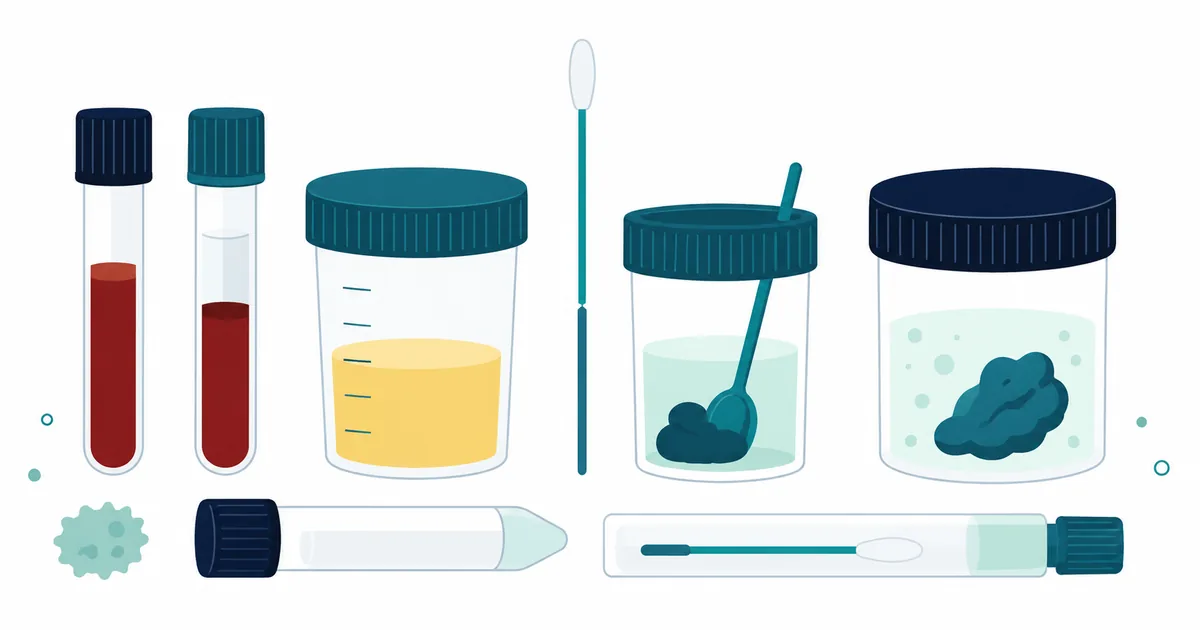
In healthcare and laboratory testing, a specimen is the sample collected from a person and sent to the laboratory for testing. A specimen may be blood, urine, stool, saliva, a swab, tissue, or another body fluid or material.
MedlinePlus explains that a laboratory test checks a sample of blood, urine, another body fluid, or tissue to learn about a person’s health. The sample is sent to a laboratory, where healthcare professionals test it to see whether it contains certain substances and how much.
In simple terms: a specimen is what the lab receives and tests.
This page explains what the word means, how specimens differ from test results, why collection quality matters, and why some specimens may need to be repeated.
Specimen vs sample: is there a difference?
In everyday language, “specimen” and “sample” are often used almost interchangeably.
A patient may say: “They took a blood sample,” “I gave a urine sample,” or “The lab tested my sample.”
A laboratory report or healthcare worker may say: “The specimen was received,” “The specimen was haemolysed,” “The specimen was unsuitable,” or “Please repeat the specimen.”
| Word | Plain meaning |
|---|---|
| Sample | The material collected from the patient |
| Specimen | The sample once it is treated as a laboratory testing item |
So a blood sample collected from your arm becomes a blood specimen in the laboratory workflow.
Common specimen types
Laboratories test many specimen types. The right specimen depends on the test requested.
| Specimen type | Common examples of testing |
|---|---|
| Blood | Full blood count, kidney tests, liver tests, glucose, hormones, clotting tests |
| Urine | Urinalysis, urine culture, pregnancy testing, albumin-creatinine ratio |
| Stool | Occult blood, infection testing, inflammation markers, parasites |
| Swab | Throat, nose, wound, genital, or skin infection testing |
| Sputum | Respiratory infection testing |
| Saliva | Some hormone, genetic, or infection tests |
| Tissue | Biopsy and histopathology |
| Cerebrospinal fluid | Infection, inflammation, or neurological investigations |
| Pleural or ascitic fluid | Body fluid analysis in specific clinical contexts |
The same condition may require different specimen types depending on the question. For example, a suspected infection might involve blood, urine, sputum, wound swab, or cerebrospinal fluid, depending on symptoms and clinical concern.
Why the correct specimen matters
The laboratory can only test what it receives. If the wrong specimen is collected, the result may be delayed, misleading, or impossible to report.
For example:
- A full blood count usually needs whole blood in the correct anticoagulant tube.
- Many chemistry tests use serum or plasma.
- Coagulation tests need citrate plasma with the correct fill volume.
- Blood cultures need special culture bottles.
- Urine culture needs a urine specimen collected in a suitable container.
- Histology needs tissue preserved and transported correctly.
A test request and specimen type must match. Otherwise, the laboratory may reject the specimen and request a repeat.
Why labelling matters
Specimen labelling is one of the most important safety steps in laboratory medicine.
A specimen label usually needs enough information to match the specimen to the correct patient and request. This may include:
- Patient name
- Date of birth
- Patient identification number
- Date and time of collection
- Specimen type
- Collector details
- Barcode or request number
Wrong or missing labels can be serious because the laboratory must be sure the specimen belongs to the right person. If identity cannot be confirmed, the lab may not be able to test the specimen safely.
What happens when a specimen reaches the lab?
Once a specimen arrives in the lab, it may go through several steps:
- Reception or booking-in
- Patient and request matching
- Barcode scanning
- Specimen type check
- Tube or container check
- Sample preparation
- Testing
- Quality checks
- Result validation
- Result release
Different departments handle different specimen types. Haematology may test whole blood. Clinical biochemistry may test serum, plasma, urine, or fluids. Microbiology may test swabs, urine, blood cultures, sputum, stool, or other specimens. Histopathology examines tissue.
What makes a specimen unsuitable?
Sometimes a laboratory cannot test a specimen or cannot trust the result fully. This may happen because of collection, transport, or handling issues.
A specimen may be unsuitable if:
- It is not labelled correctly
- The label and request do not match
- The wrong tube or container was used
- The tube is underfilled
- The sample is clotted when it should not be
- The sample is haemolysed
- The sample leaked
- The sample was contaminated
- It arrived too late
- It was stored at the wrong temperature
- There was not enough sample volume
- The request information was incomplete
This does not always mean someone did something careless. Some collection problems happen despite good technique. But the laboratory must protect result accuracy and patient safety.
What does haemolysed specimen mean?
A haemolysed specimen means red blood cells have broken open, releasing their contents into the liquid part of the blood sample.
Haemolysis can happen inside the body in some medical situations, but it can also happen during collection or handling. When it happens in the tube, it can interfere with some test results. For example, potassium and LDH can be affected because red blood cells contain these substances.
This is why the lab may reject a haemolysed specimen or add a comment to the report.
What does clotted specimen mean?
Some blood tests need blood that has not clotted. These tests use tubes containing anticoagulants. If the sample clots anyway, it may not be suitable.
For example, a full blood count needs an EDTA blood specimen. If the specimen clots, the analyser may not be able to count cells accurately.
Coagulation tests also need strict collection conditions. A clotted or underfilled coagulation tube can make results unreliable.
What is a contaminated specimen?
A contaminated specimen contains material that should not be there.
Examples include:
- Skin bacteria in a blood culture bottle
- Vaginal contamination in a urine sample
- Stool contamination in a urine specimen
- Environmental contamination from poor container handling
- Wrong additive contamination from tube order or transfer errors
Contamination may lead to confusing or misleading results. In some cases, the test may need repeating.
Why timing matters
Some specimens are stable for longer than others. Some tests need quick transport or special storage.
Timing can affect:
- Glucose
- Blood gases
- Lactate
- Potassium
- Coagulation tests
- Microbiology cultures
- Certain hormones
- Some specialist tests
The lab may reject or comment on a specimen if it arrives too late or was not handled correctly.
Why collection instructions matter
Preparation instructions help protect result accuracy. MedlinePlus explains that lab results may be affected by eating or drinking, medicines or supplements, hard exercise, menstrual period, and whether preparation instructions such as fasting were followed.
Examples include:
- Fasting before some glucose or lipid tests
- Avoiding certain medicines only if instructed
- Using a clean-catch method for urine
- Collecting stool in the correct container
- Collecting timed urine over the correct period
- Taking blood cultures before antibiotics in some clinical pathways, if clinically appropriate
- Transporting samples quickly when needed
Patients should follow the instructions given by their healthcare team or laboratory.
Specimen and result are not the same thing
A specimen is the material collected for testing. A result is the information produced after the lab tests that specimen.
For example:
- Specimen: blood | Test: full blood count | Result: haemoglobin, white blood cell count, platelet count, and other values
- Specimen: urine | Test: urine culture | Result: whether significant bacterial growth was detected and what organism was found
This distinction matters because a rejected specimen is not the same as an abnormal result. It means the lab could not perform or report the test reliably from that sample.
What happens if a specimen is rejected?
If a specimen is rejected, the laboratory may request another sample. This is called a repeat specimen or repeat sample.
Reasons may include:
- Identification problem
- Wrong container
- Insufficient volume
- Clotted sample
- Haemolysed sample
- Leaking container
- Delayed transport
- Contamination
- Unclear request
A repeat request can be annoying, but it protects safety. It is better to repeat a specimen than release a result that may be unreliable.
Key takeaway
A specimen is the sample collected from a person and sent to the laboratory for testing. It may be blood, urine, stool, saliva, a swab, tissue, or another body fluid.
Specimen quality matters because the lab result depends on the sample being correctly collected, labelled, transported, prepared, and tested.
The safest way to understand the word is: a specimen is not the result; it is the material the lab uses to produce the result.
FAQ
What is a specimen in a lab?
A specimen is a sample collected from the body, such as blood, urine, stool, tissue, or a swab, and sent to the lab for testing.
Is a specimen the same as a sample?
In everyday healthcare language, they are often used similarly. “Specimen” is the more laboratory-style term for the sample being tested.
Why would a specimen be rejected?
A specimen may be rejected if it is mislabelled, collected in the wrong container, clotted, haemolysed, leaking, contaminated, delayed, or insufficient in volume.
What does haemolysed specimen mean?
It means red blood cells have broken open in the sample. This can affect some test results and may require repeat collection.
What types of specimens do labs test?
Labs may test blood, urine, stool, swabs, sputum, saliva, tissue, cerebrospinal fluid, and other body fluids.
Educational only. Specimen collection and preparation requirements vary by test, provider, and laboratory.
Read next: What happens to your blood sample in the lab?
More questions answered
Is a specimen the same thing as a sample?
In everyday laboratory language, specimen and sample are sometimes used interchangeably, but they can have slightly different technical meanings depending on the setting. A specimen is material collected from a person for examination, while a sample can also mean a portion taken from that specimen for analysis. Laboratories use controlled terminology to preserve traceability through each stage of testing. The exact wording matters less to patients than making sure the correct material is collected, labelled and transported properly.
Why can a laboratory reject a specimen?
A laboratory may reject a specimen when its identity, container, volume or condition makes reliable testing unsafe or impossible. Examples include missing identifiers, leakage, contamination, clotting in an inappropriate tube or serious sample deterioration. Rejection rules vary by test because different analyses have different requirements. If a specimen is unsuitable, the healthcare team may need to arrange recollection.
Why does the specimen container matter?
The container can determine whether a specimen remains chemically and physically suitable for the requested test. Blood tubes may contain anticoagulants or preservatives, while urine, swab and tissue containers can have their own transport media or additives. Using the wrong container can alter the sample or make the requested method invalid. Collection staff therefore follow test-specific laboratory instructions.
Why do some specimens need to be kept cold or protected from light?
Some analytes, cells or microorganisms are affected by temperature, light or time after collection. Laboratories therefore specify storage and transport conditions that preserve specimen stability until testing can begin. These requirements are test-specific, so not every sample should be chilled or protected in the same way. Correct handling helps prevent changes that could make the result misleading.
What does specimen contamination mean?
Specimen contamination occurs when material not truly representing the intended sample is introduced during collection, handling or transport. This can include skin organisms entering a blood culture or external material entering a urine sample. Contamination may produce misleading laboratory findings and can sometimes require recollection. Good collection technique and suitable containers help reduce the risk.
What happens to a specimen when it arrives at the laboratory?
On arrival, the specimen is checked against the request to confirm identity, test requirements and sample suitability. It may then be registered, sorted, centrifuged, aliquoted or otherwise prepared before analysis. Laboratories maintain traceability so the sample and its results can be followed through the workflow. Samples that fail acceptance criteria are investigated according to local procedure.