
⚕️ Educational content only. This article provides career information about biomedical science in the UK. Salary figures and entry requirements may change; always check current IBMS, NHS Jobs, and HCPC guidance for the most up-to-date information.
Biomedical science is a diverse and rewarding career field at the heart of modern healthcare. Biomedical scientists (BMS) perform the laboratory tests that underpin around 70% of all clinical decisions. From blood transfusion to microbiology, histopathology to clinical biochemistry, there are numerous specialisms and career pathways available for graduates of biomedical science and related degrees.
Key Takeaways
- Biomedical scientists in the UK must be registered with the HCPC and typically hold an IBMS-accredited degree.
- NHS bands range from Band 5 (newly qualified) to Band 8+ (consultant biomedical scientist / laboratory manager).
- Specialisms include haematology, clinical biochemistry, microbiology, blood transfusion, histopathology, and cellular pathology.
- Clinical scientist and clinical biochemist (consultant chemical pathologist) routes offer further career progression for those seeking specialist or leadership roles.
What Does a Biomedical Scientist Do?
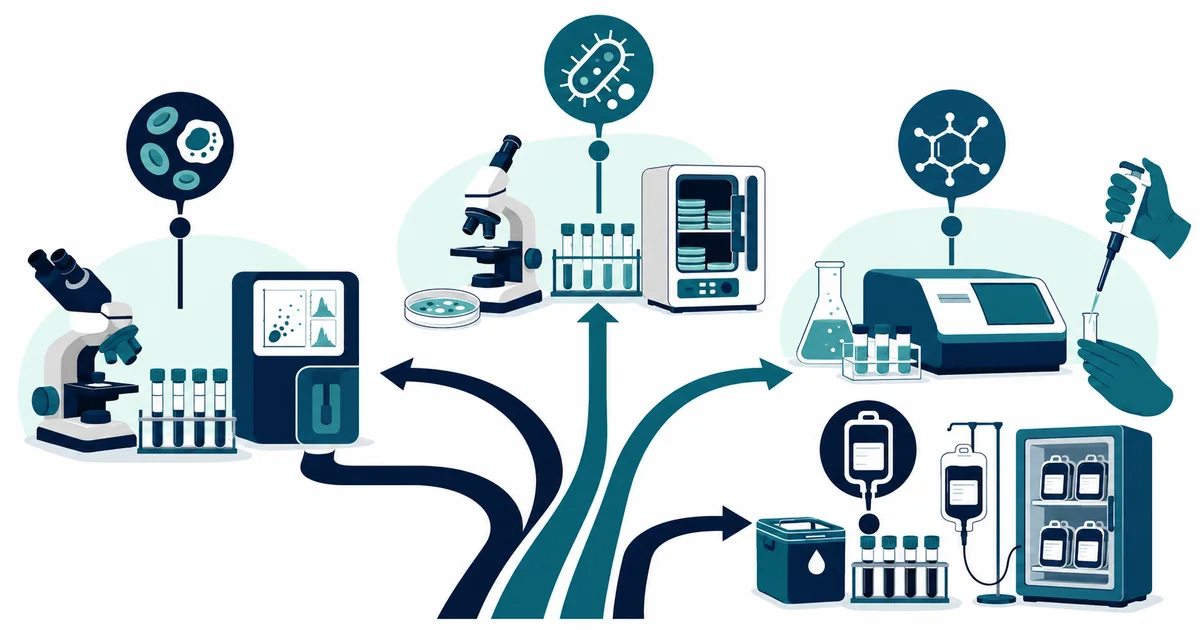
Biomedical scientists perform and validate laboratory analyses across multiple disciplines. Day-to-day work may include processing blood samples on automated analysers, examining blood films under the microscope, performing microbiological cultures, processing histological tissue sections, cross-matching blood for transfusion, and running molecular assays such as PCR. BMS professionals also perform equipment maintenance, internal quality control, and contribute to audit and service development. They work predominantly in NHS hospital laboratories, but also in private laboratories, research institutions, pharmaceutical companies, and public health agencies.
Qualification Route: Becoming an HCPC-Registered BMS
The primary route is an IBMS-accredited BSc in Biomedical Science (3 years in England). Graduates must then complete a Certificate of Competence (portfolio demonstrating practical competencies, assessed by the IBMS) while working in an NHS or approved laboratory. Once passed, they apply for HCPC registration as a biomedical scientist. Some universities offer integrated 4-year MBiomedSci degrees that include the Certificate of Competence year. Apprenticeship routes are also available. Continuing professional development (CPD) is mandatory for HCPC re-registration.
NHS Pay Bands and Salary Overview
NHS BMS salaries follow the Agenda for Change pay structure. Approximate 2024/25 figures: Band 5 (newly qualified BMS): £28,407–£34,581; Band 6 (experienced/specialist BMS): £35,392–£42,618; Band 7 (senior/specialist): £43,742–£50,056; Band 8a–8b (lead/advanced): £50,952–£66,000+. London weighting adds 20% (high cost area supplement). Private sector and pharmaceutical roles often pay above NHS rates.
Career Progression and Specialisms
BMS can specialise in: Haematology (blood counting, coagulation, blood films); Clinical Biochemistry (routine chemistry, endocrinology, toxicology); Microbiology (cultures, sensitivities, molecular diagnostics); Blood Transfusion (compatibility testing, blood components); Histopathology / Cellular Pathology (tissue processing, staining, cytology); Immunology (autoantibody testing, protein analysis). Advanced roles include Consultant BMS, Laboratory Manager, and Quality Lead. The NHS Clinical Scientist (Scientist Training Programme / STP) offers a 3-year Masters-level training route for those seeking specialist scientific registration (RCPath/HCPC Clinical Scientist).
References
- Institute of Biomedical Science (IBMS). Becoming a biomedical scientist. ibms.org
- Health and Care Professions Council (HCPC). Standards of proficiency: biomedical scientists. hcpc-uk.org
- NHS Health Careers. Biomedical scientist. healthcareers.nhs.uk
More questions answered
What jobs can you do with a biomedical science degree besides becoming a biomedical scientist?
A biomedical science degree can support careers in research, biotechnology, pharmaceuticals, clinical trials, public health, quality, regulatory work and scientific services. Some graduates also move into data, education, scientific sales or postgraduate professional training. Each route values a different mix of laboratory experience, communication and analytical skills. Job specifications are the best guide to what additional training a particular career requires.
Which biomedical science careers require professional registration?
Registration depends on the job title and country, not simply on having a biomedical science degree. In the UK, biomedical scientist is a regulated profession, while many research, biotechnology and commercial laboratory roles are not regulated under the same route. Other healthcare science professions may have their own registration requirements. Graduates should check the regulator named in the job advert before assuming their degree provides eligibility.
Can biomedical science graduates work in pharmaceutical or biotechnology companies?
Yes. Pharmaceutical and biotechnology companies employ science graduates in laboratory research, quality, manufacturing support, clinical development and other technical functions. The exact role may require skills in molecular methods, cell biology, data analysis, documentation or regulated quality systems. A biomedical science background can be relevant, but industry experience or specialised techniques may strengthen an application. Graduates should target roles whose essential criteria match their actual skills.
Do you need a master’s degree for a good biomedical science career?
Not necessarily. Many entry-level science roles accept an appropriate bachelor’s degree, while some specialist research, data or advanced scientific jobs prefer or require postgraduate study. A master’s degree is most useful when it develops skills that are clearly connected to a target role. It does not automatically replace professional registration, practical experience or workplace competence. Checking real vacancies before enrolling can prevent unnecessary postgraduate study.
What skills from biomedical science transfer to non-laboratory jobs?
Biomedical science develops data interpretation, scientific literacy and problem-solving as well as practical laboratory knowledge. Students also gain experience evaluating evidence, documenting work and communicating technical information. These skills can transfer into quality, regulation, clinical research, scientific writing, education and other roles. Applicants should translate their experience into the business or professional language used in the target job description.
How can a biomedical science student gain useful career experience?
Placements, research projects, laboratory assistant work and structured volunteering can provide practical experience before graduation. Students can also build evidence through data projects, scientific communication, quality activities and relevant part-time work. The most useful experience is the type that develops skills required by a target career path rather than simply adding another line to a CV. Keeping records of specific tasks and outcomes makes later applications stronger.
Can a biomedical science career become less laboratory-based over time?
Yes. Experienced biomedical science professionals can move into quality, management, education, regulation, data, commercial or research-coordination roles depending on their skills. Some careers remain strongly laboratory based, while others shift toward leadership, interpretation or service development. Moving away from bench work may require different communication, project or business skills. Career progression is therefore broader than simply becoming more technically specialised.
Biomedical Scientist vs Lab Technician: What’s the Difference?
NHS vs Private Laboratory Work: What’s the Difference for Biomedical Scientists?
UK vs Australian Biomedical Scientist: Qualifications, Registration and Career Differences
Quality Control vs Quality Assurance in the Laboratory
Biomedical Scientist Apprenticeship UK Guide
Biomedical Scientist Personal Statement Guide
Locum Biomedical Scientist: UK Career Guide
Biomedical Scientist Job Description: UK Guide
Biomedical Scientist CV: UK NHS Guide and Example
Clinical Scientist vs Biomedical Scientist
How to Read a Scientific Paper: A Beginners Guide for Biomedical Students