
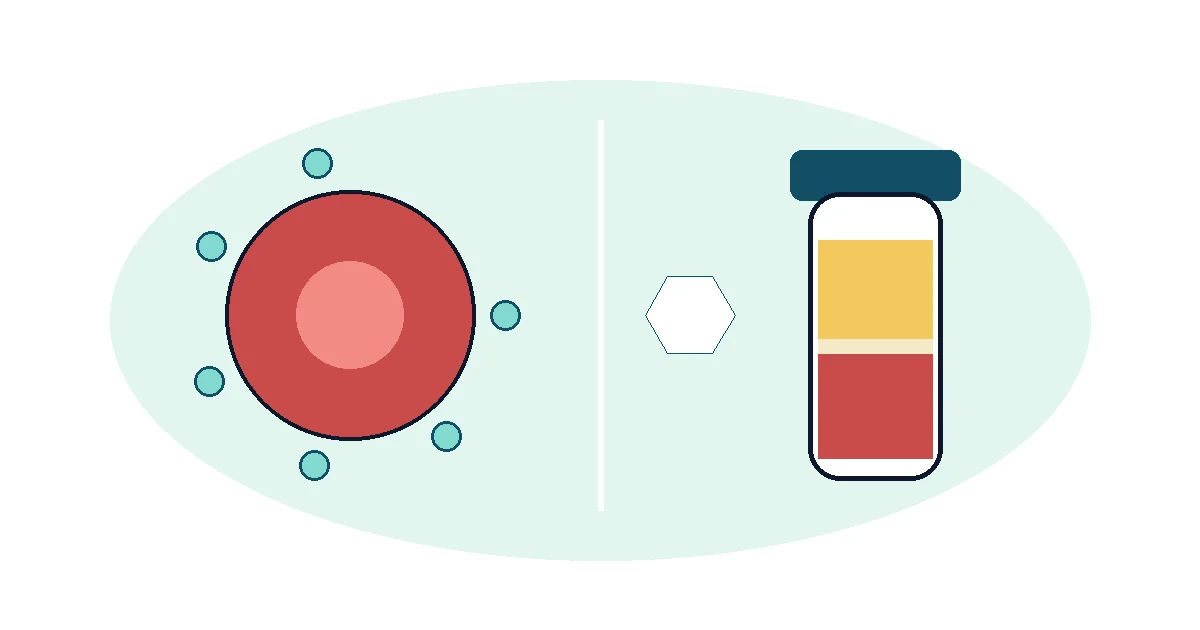
HbA1c and fasting glucose are both used to assess glucose regulation, but they answer different questions. HbA1c reflects glucose exposure over roughly the life cycle of circulating red blood cells, while a fasting plasma glucose test measures the glucose concentration in the blood at one fasting time point.
That is why one test can look different from the other without either result being a laboratory mistake.
HbA1c vs fasting glucose at a glance
| Feature | HbA1c | Fasting plasma glucose |
|---|---|---|
| What it reflects | Longer-term glucose exposure through glycated haemoglobin | Glucose concentration at the time the fasting sample is collected |
| Fasting required? | No fasting is normally required for the HbA1c measurement itself | Yes, when the test is specifically requested as fasting plasma glucose |
| Typical specimen | Anticoagulated whole blood | Plasma prepared and handled according to the laboratory’s glucose protocol |
| Short-term changes | Less influenced by a single meal or a single day’s fluctuation | More sensitive to short-term physiological and pre-analytical changes |
| Important limitations | Can be affected by altered red-cell lifespan, some haemoglobin variants and certain clinical conditions | Depends on correct fasting, specimen handling and the glucose level at that particular time |
| Can results disagree? | Yes. The tests measure different biological windows and do not always identify the same people | |
What does HbA1c actually measure?
Haemoglobin is the oxygen-carrying protein inside red blood cells. Glucose in the circulation can bind to haemoglobin, creating glycated haemoglobin. The HbA1c test measures the proportion of haemoglobin that has become glycated.
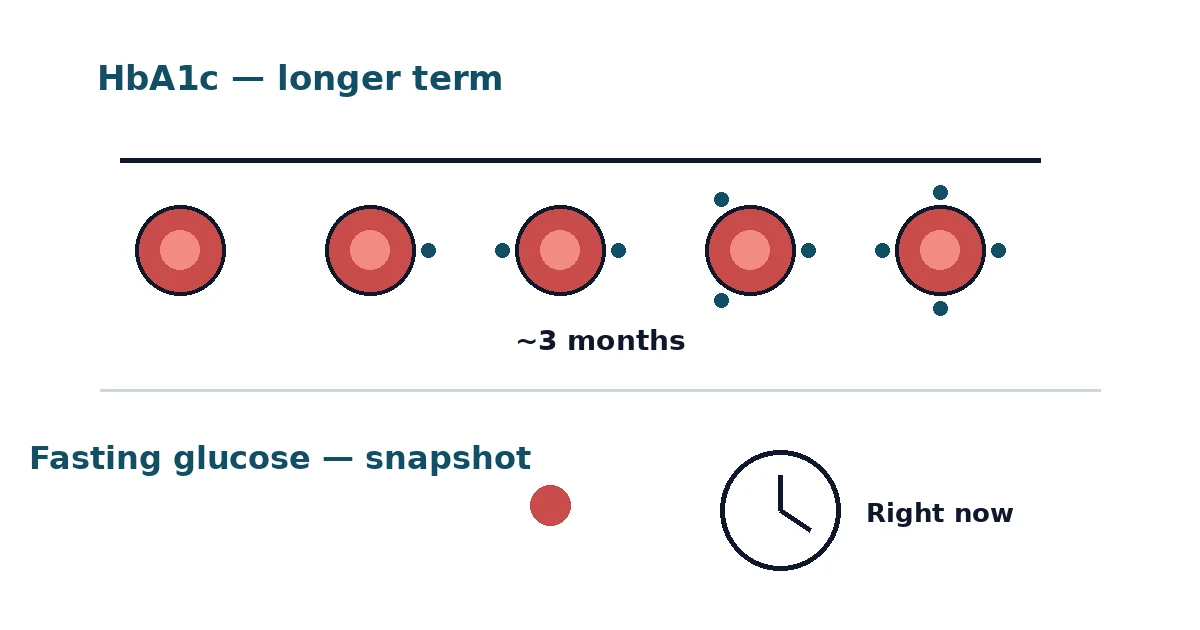
Because red blood cells circulate for an extended period, HbA1c provides a longer-term view of glucose exposure rather than a snapshot from the moment blood is taken. It is often described as representing average glucose over the preceding few months, although more recent glucose exposure contributes more strongly than very old exposure.
The major practical advantage is that the patient does not normally need to fast for HbA1c itself. That makes collection convenient, but convenience does not make the test perfect for every situation.
What does fasting glucose measure?
A fasting plasma glucose test measures the concentration of glucose circulating in the plasma after the patient has followed the required fasting instructions. Unlike HbA1c, it is a single-time-point biochemical measurement.
That makes it more sensitive to short-term factors. Acute illness, stress, recent activity, medication effects and whether fasting instructions were followed can influence the clinical context in which a glucose result is interpreted. Pre-analytical handling also matters because blood cells continue to metabolise glucose after collection if the specimen is not processed or preserved appropriately.
The laboratory therefore treats glucose as both a clinical measurement and a time-sensitive specimen-handling problem.
Why can HbA1c and fasting glucose disagree?
The tests are not measuring the same biological quantity, so perfect agreement should not be expected. A fasting glucose result captures one point in time, while HbA1c integrates glucose exposure over a much longer period.
A person may have a fasting value that is different from their usual pattern on other days. Conversely, HbA1c can be misleading when red blood cell survival is shortened or prolonged, or when haemoglobin characteristics interfere with the assay. NIDDK guidance specifically notes that conditions affecting red-cell lifespan and some haemoglobin variants can alter HbA1c results.
When two test results do not fit together, clinicians consider the whole clinical context and may repeat or use another appropriate test. A single online comparison cannot determine which result is more important for an individual person.
Does HbA1c require fasting?
No fasting is normally needed for an HbA1c measurement. Food eaten immediately before the blood draw does not create the kind of immediate change in HbA1c that it can create in a plasma glucose measurement.
However, patients sometimes have HbA1c collected at the same appointment as other tests that do require fasting. The preparation instructions for the whole blood-test request therefore matter more than the HbA1c requirement alone.
If the appointment instructions say to fast, follow those instructions or confirm them with the requesting healthcare service rather than assuming that no fasting is needed because HbA1c is on the form.
Which test is better for short-term changes?
Fasting glucose is much closer to a current measurement, so it can change more quickly with short-term physiology. HbA1c smooths glucose exposure across a much longer period and therefore does not show day-to-day variation in the same way.
This is also why HbA1c is not a replacement for every direct glucose measurement. Different clinical questions require different laboratory tools. A healthcare professional chooses the appropriate test based on whether the question concerns screening, diagnosis, monitoring, symptoms, pregnancy, acute illness or another context.
From a laboratory-science perspective, “better” is the wrong question. The better test is the one that measures the biological window needed for the specific clinical question.
What can make HbA1c less reliable?
Anything that substantially changes red blood cell lifespan can change the relationship between HbA1c and average glucose. Examples include recent blood loss, transfusion, some haemoglobin disorders and conditions or treatments that change red-cell turnover.
Some haemoglobin variants can also interfere with particular assay methods. Modern laboratories select and quality-control HbA1c methods carefully, but no result exists independently of the specimen and analytical method.
When HbA1c looks inconsistent with direct glucose measurements or the clinical picture, the discrepancy itself can be useful information for the healthcare team to investigate.
What can affect fasting glucose?
The most obvious factor is whether the patient has genuinely followed the fasting requirement. A fasting glucose sample is intended to be collected after the required period without caloric intake, according to the healthcare service’s instructions.
The result can also vary because glucose is biologically dynamic. Illness, stress and medications can affect circulating glucose, while poor specimen handling can allow cells in the tube to consume glucose after collection.
For this reason, laboratories have procedures governing tube selection, transport and separation. The number on the report is the end of a chain that begins with correct patient preparation and sample handling.
So which one should you pay attention to?
There is no universal rule that HbA1c should overrule fasting glucose or vice versa. They measure different aspects of glucose regulation, and healthcare professionals may use either or both depending on the purpose of testing.
If the two results appear inconsistent, that does not automatically mean one is wrong. It may reflect timing, biological variation, an HbA1c limitation or another clinical factor that needs professional interpretation.
The safest educational takeaway is to understand what each test measures and avoid trying to convert one individual result into a diagnosis without the appropriate clinical context.
Related reading
For a deeper explanation of glycated haemoglobin, see [LINK: hba1c-explained — how the HbA1c test works]. For the wider group of glucose measurements, see [LINK: blood-glucose-tests-explained — different blood glucose tests explained].
FAQ
Is HbA1c the same as fasting blood sugar?
No. HbA1c measures glycated haemoglobin and reflects longer-term glucose exposure, while fasting plasma glucose measures glucose at the time a fasting blood sample is collected. The two results therefore describe different biological time periods. They may be used together, but one should not be treated as a direct numerical substitute for the other.
Do I need to fast before an HbA1c test?
Fasting is not normally required for the HbA1c measurement itself. HbA1c is based on glycated haemoglobin, so eating immediately before collection does not affect it in the same way as a direct fasting glucose measurement. Other blood tests ordered at the same appointment may still require fasting. Follow the preparation instructions provided for the complete set of requested tests.
Why is my HbA1c different from my fasting glucose result?
The tests can disagree because HbA1c reflects longer-term exposure while fasting glucose is a single-time-point measurement. Biological variation, short-term illness, fasting conditions and specimen handling can influence glucose. HbA1c can also be affected by altered red-cell lifespan or some haemoglobin variants. A healthcare professional can assess whether the difference is expected or requires further investigation.
Can anaemia affect HbA1c?
Some conditions that change red blood cell production or survival can affect the relationship between HbA1c and average glucose. The direction and size of the effect depend on the underlying cause, so “anaemia” is not one simple interference with one predictable outcome. Laboratories and clinicians may consider direct glucose testing or other information when HbA1c appears inconsistent with the clinical picture. Personal interpretation requires a healthcare professional who knows the cause and context of the blood-count abnormality.
Is fasting glucose affected by what I ate the day before?
A fasting test is designed to measure plasma glucose after the required fasting period, but glucose regulation is influenced by many short-term biological factors. The healthcare service’s preparation instructions should therefore be followed exactly rather than replaced with a self-selected diet or longer fast. Illness, stress and some medicines may also influence a glucose measurement. If preparation instructions were not followed, tell the healthcare professional or collection staff rather than trying to adjust the result yourself.
Which test changes faster, HbA1c or fasting glucose?
Fasting glucose can change much more quickly because it measures the glucose concentration at one point in time. HbA1c changes more gradually because it reflects glucose exposure across circulating red blood cells over a longer period. This difference is one reason the two tests are useful for different purposes. Neither should be interpreted as a stand-alone diagnosis without the appropriate clinical criteria and context.
Educational purposes only. Not medical advice.
### FACT-CHECK SOURCES — NOT FOR PUBLICATION
– US National Institute of Diabetes and Digestive and Kidney Diseases (NIDDK), *The A1C Test & Diabetes*.
– NIDDK, *Diabetes & Prediabetes Tests*.
—
## 3) ESR vs CRP