
Phosphate Blood Test Explained
A phosphate blood test measures the amount of phosphate in the blood. Phosphate contains the mineral phosphorus, so the test may also be called a phosphorus test. MedlinePlus explains that phosphate contains phosphorus and that phosphate testing may also be called phosphorus testing.
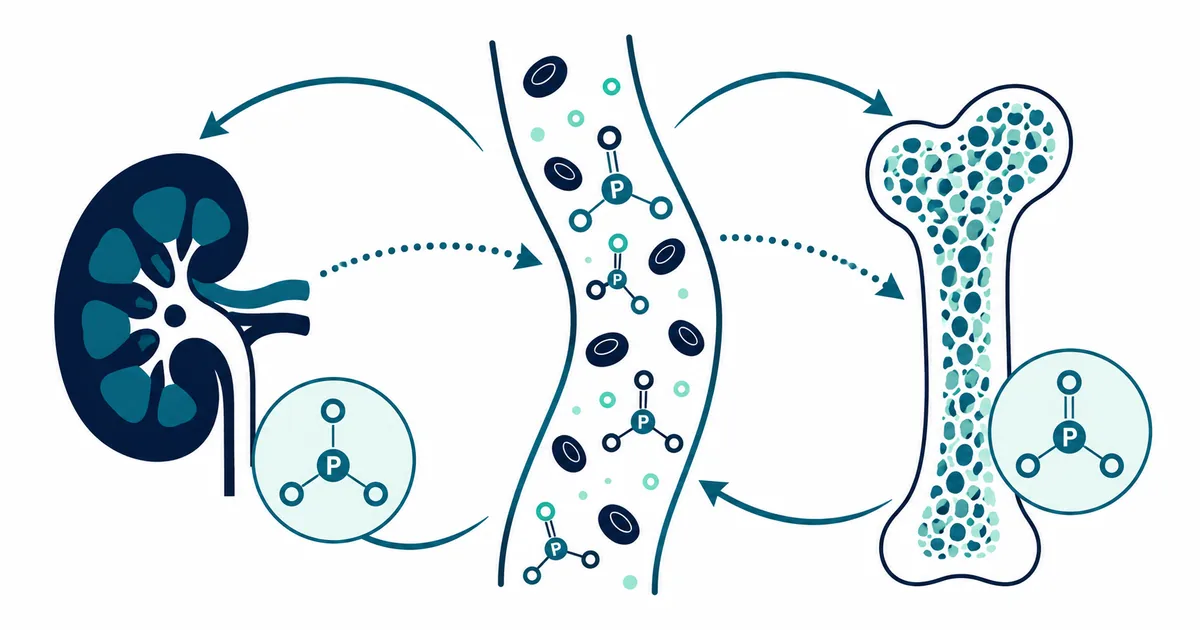
Phosphate is not just a diet-related number. It is part of a mineral system involving the kidneys, intestines, bones, calcium, vitamin D, and parathyroid hormone.
For patients, phosphate may appear on a kidney, bone, or mineral blood test panel. For biomedical science students, phosphate is a good example of how one analyte connects clinical biochemistry, renal physiology, endocrine control, and bone metabolism.
What is phosphate?
Phosphate is an electrolyte. Electrolytes are charged minerals that help regulate fluid balance, acid-base balance, nerve function, and muscle function.
MedlinePlus explains that phosphate helps build strong bones and teeth, helps make energy, and supports nerve and muscle function.
Most phosphate in the body is stored in bones and teeth. The rest is found in cells and blood, where it contributes to energy production, cell membranes, DNA and RNA, oxygen handling, and buffering.
StatPearls explains that the majority of body phosphate is found in bones and teeth, while the rest is distributed across tissues and supports processes such as ATP, nucleic acids, membranes, signalling, and buffering.
Phosphate vs phosphorus
The terms phosphate and phosphorus are often used together. Phosphorus is the mineral element, while phosphate is the form commonly measured in blood. Laboratories may use either term on reports. The result should always be interpreted using the reporting laboratory’s unit and reference interval.
Why is phosphate tested?
Phosphate may be tested to assess or monitor: kidney disease, chronic kidney disease, bone disorders, parathyroid disorders, abnormal calcium results, vitamin D-related issues, acid-base imbalance, poorly controlled diabetes, severe illness, refeeding risk in selected hospital contexts, and some medication effects.
MedlinePlus states that phosphate testing is often used with other tests to help diagnose or monitor kidney disease, bone disorders, and parathyroid disorders.
How phosphate is controlled
Phosphate balance is mainly controlled by: kidneys, intestines, bones, vitamin D, parathyroid hormone, and FGF23 in specialist physiology contexts.
MedlinePlus explains that the body controls phosphate mainly through the kidneys and intestines, and that phosphate is linked with calcium, vitamin D, and parathyroid hormone.
This is why phosphate is rarely interpreted alone.
Phosphate and kidney function
Kidneys filter extra phosphate and remove it in urine. When kidney function is reduced, phosphate can build up in the blood.
MedlinePlus states that high phosphate levels are a common sign that the kidneys are not working well to remove extra phosphate from blood.
NIDDK explains that in chronic kidney disease, damaged kidneys may not clear extra phosphorus properly, leading to high blood phosphorus and changes in calcium, parathyroid hormone, and bone-mineral balance.
Phosphate and calcium
Calcium and phosphate are closely linked. MedlinePlus explains that when blood calcium increases, phosphate tends to decrease, and when calcium decreases, phosphate tends to increase.
This relationship is influenced by parathyroid hormone, vitamin D, kidney handling, and bone metabolism. That is why phosphate is often checked with calcium.
High phosphate
High phosphate is called hyperphosphataemia.
Possible reasons include: chronic kidney disease, kidney failure, hypoparathyroidism, acidosis, poorly controlled diabetes or DKA-related contexts, rhabdomyolysis, tissue breakdown, severe infection or illness, crush injury, excess phosphate intake or phosphate-containing products, and certain medicines.
MedlinePlus links high phosphate with kidney disease, kidney failure, hypoparathyroidism, acidosis, and certain medicines or phosphate-containing products.
High phosphate can also lower calcium and contribute to symptoms related to low calcium in some cases.
Low phosphate
Low phosphate is called hypophosphataemia.
Possible reasons include: hyperparathyroidism, vitamin D deficiency, malnutrition, malabsorption, alcohol-related illness, refeeding syndrome, recovery phase of DKA treatment, certain antacids, diuretics, and severe illness.
MedlinePlus and Cleveland Clinic describe low phosphate associations including hyperparathyroidism, vitamin D deficiency, malnutrition, malabsorption, alcohol use disorder, refeeding syndrome, and certain medicines.
Mildly low phosphate may not cause symptoms, but severe low phosphate can be dangerous.
Symptoms linked with phosphate changes
Phosphate levels that are high or mildly low may not cause symptoms by themselves. MedlinePlus notes that high or mildly low phosphate levels usually do not cause symptoms on their own.
Possible symptoms of severe low phosphate can include: muscle weakness, muscle pain, bone pain, confusion, irritability, seizures in severe cases, and breathing or heart-related problems in severe cases.
High phosphate may contribute to symptoms related to low calcium, such as cramps, itchy skin, bone pain, seizures, or irregular heartbeat in some cases.
Phosphate in children
Children may have higher phosphate levels than adults because bones are still growing. MedlinePlus notes that children often have higher phosphate levels because their bones are still developing. This is why age-specific reference intervals matter.
What tests are checked with phosphate?
Phosphate is commonly interpreted with: calcium, magnesium, vitamin D, parathyroid hormone, creatinine, eGFR, urea, albumin, alkaline phosphatase, and urine phosphate in selected cases.
MedlinePlus states that abnormal phosphate levels are often investigated with calcium, vitamin D, and parathyroid hormone testing.
What happens during the test?
A phosphate test uses a blood sample, usually taken from a vein in the arm. Preparation depends on local policy and any other tests ordered at the same time. Some medicines and supplements may affect phosphate, so patients should follow their healthcare provider’s instructions.
Key takeaway
A phosphate blood test measures phosphate, a phosphorus-containing electrolyte involved in bones, energy, muscles, nerves, kidneys, and hormone balance.
A high or low phosphate result is not usually interpreted alone. It makes the most sense with calcium, vitamin D, PTH, kidney function, magnesium, albumin, and clinical context.
The safest way to understand phosphate is: phosphate is a kidney-bone-hormone marker, not a stand-alone diagnosis.
FAQ
Is phosphate the same as phosphorus?
Phosphate contains phosphorus, so the blood test may be called either phosphate or phosphorus testing.
Why are phosphate and calcium checked together?
They are closely linked through kidney handling, vitamin D, and parathyroid hormone.
What causes high phosphate?
High phosphate can be linked with kidney disease, kidney failure, hypoparathyroidism, acidosis, tissue breakdown, or phosphate-containing medicines or products.
What causes low phosphate?
Low phosphate may be linked with vitamin D deficiency, hyperparathyroidism, malnutrition, malabsorption, alcohol-related illness, refeeding syndrome, or some medicines.
Are phosphate levels different in children?
Yes. Children often have higher phosphate levels because their bones are still growing.
Educational only; this article does not provide medical advice, diagnosis, treatment guidance, diet guidance, or personal result interpretation.
Read next: Calcium Blood Test Explained
More questions answered
Why are other blood tests often ordered with the phosphate blood test?
Related tests can show whether a change in the phosphate blood test fits a broader laboratory pattern. Measurements such as calcium, kidney function, vitamin D and parathyroid hormone may assess connected organs, pathways or biological processes. This can help clinicians distinguish between several possible explanations for the same result. The tests are therefore complementary rather than interchangeable.
Can medicines or supplements affect the phosphate blood test?
Yes, some medicines or supplements can influence the phosphate blood test directly or indirectly, although the effect depends on the specific substance and assay. Other influences include kidney function, hormones, diet, cellular shifts and medicines, so medication is only one possible explanation for a change. Patients should not stop prescribed treatment just to alter a laboratory result unless a healthcare professional has specifically instructed them to do so. Medication information should be shared with the healthcare team interpreting the result.
Why might a healthcare professional request another phosphate blood test?
A second phosphate blood test may be used to confirm an unexpected result, check a trend or see whether a temporary change has resolved. Repeating the test can also help when the first specimen had a quality problem or when monitoring requires measurements at different times. A repeat value is interpreted alongside the earlier result rather than treated as an unrelated number. The need for retesting depends on the clinical question.
Why might my phosphate blood test result be flagged at one laboratory but not another?
Laboratories can use different reference intervals or decision limits because methods, instruments, reagents and populations differ. A value near a boundary may therefore be flagged differently even when the numerical results are similar. This does not automatically mean that one laboratory made an error. Always use the range printed on the same report as the result being interpreted.
Can my phosphate blood test result change even when I feel the same?
Yes. Laboratory values can change because of normal biological variation, early physiological changes, medicines, hydration, timing or other factors before noticeable symptoms occur. Feeling well also does not guarantee that every laboratory measurement will sit inside its reference interval. The importance of a change depends on its size, persistence and clinical context. Personal results should be discussed with a healthcare professional when interpretation is needed.
Does a normal phosphate blood test rule out every related condition?
No. A result inside the reference interval does not exclude every condition related to the biological system being tested. Some disorders may not affect the marker, may affect it only at certain stages or may require other tests to detect. Clinicians therefore consider symptoms, examination and related investigations rather than using one normal value as a universal rule-out. The phosphate blood test should be interpreted according to the purpose for which it was ordered.